
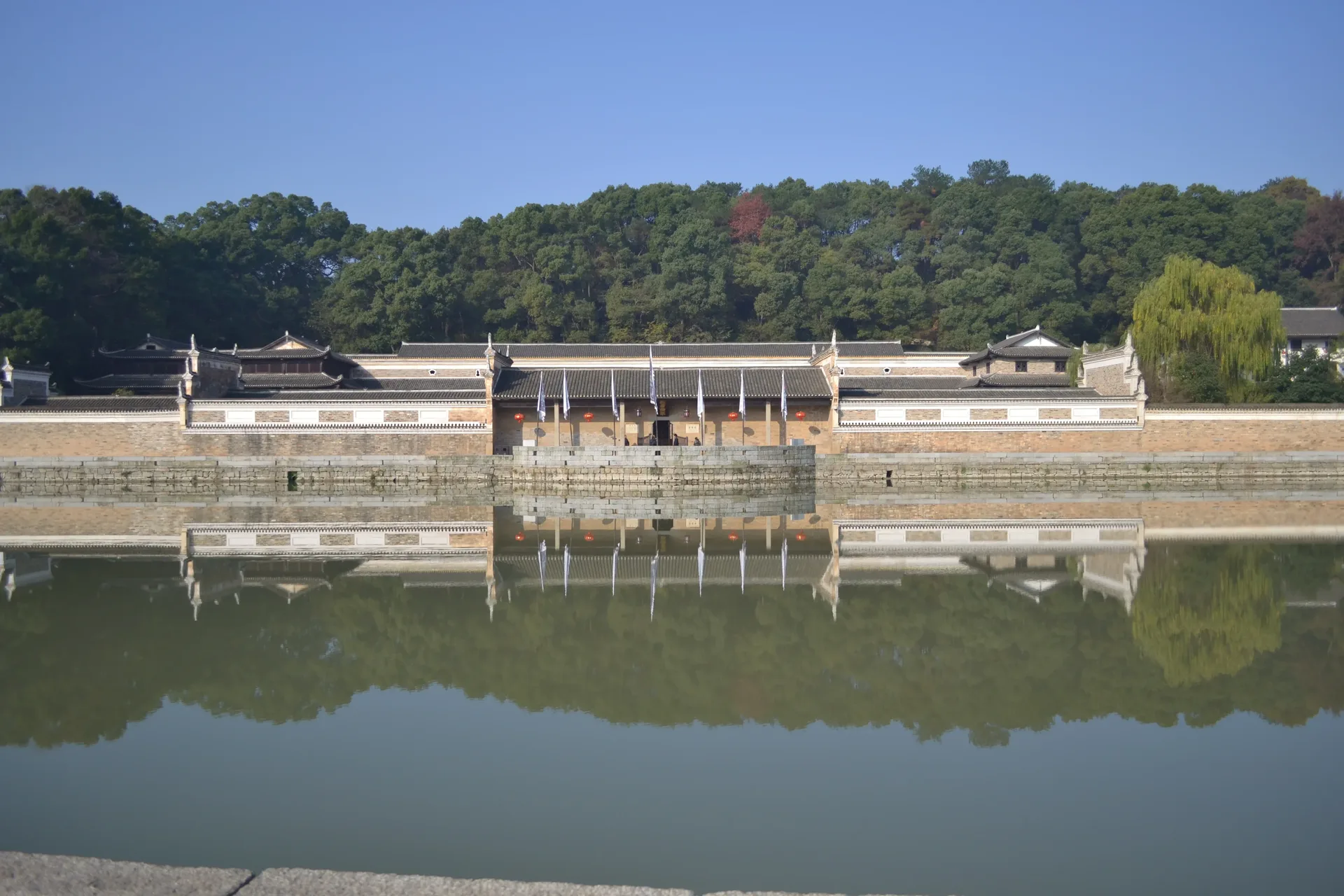
Old T recently came across an article on Shuangfeng County’s 15th Five-Year Plan. When I reached the part about cultural development, I paused.
The original reads: “Shuangfeng will take Comrade Cai Hesen’s ‘Glorious Family’ as its spiritual coordinate and the Zeng clan’s family tradition as its deep foundation… to build a ‘family-and-nation culture’ brand with nationwide recognition.”
On Cai Hesen’s side, nothing moved. The full name, the word “Comrade,” the “Glorious Family” — not a single character changed. On Zeng Guofan’s side, the three characters of his name are gone, replaced by “the Zeng clan.”
I don’t remember seeing this phrasing before, so I searched online, and while searching I kept wondering whether it was because online opinion on Zeng Guofan has turned negative again lately.
After all, this isn’t the first time. For over a century, public opinion on Zeng Guofan has swung wildly up and down several times. Just days before that article appeared, Kunlunce, a Chinese political commentary site, published two pieces in a row: “Beware of the Zeng Guofan Hype” and “From ‘Zeng the Head-Shaver’ to ‘Half a Sage’: Why Can Zeng Guofan Be Rehabilitated?”
In that case, putting Zeng Guofan’s name in front of a “cultural brand” really does require some weighing. Replacing it with “the Zeng clan” is much safer.
Searching the Documents, Finding What Doesn’t Add Up
A round of searching showed the matter was more complicated than I thought.
“Zeng clan” was not invented for this occasion. The former residence had put on an exhibition titled “Pure Fragrance Passed Down for a Century,” and it was about the Zeng family tradition. In the list of inheritors for the county’s fifth batch of intangible cultural heritage, published this June, Liu Jianhai of the Former Residence Management Office is listed with “Zeng clan family instructions.” Last October, the provincial culture and tourism department replied to a suggestion from a provincial people’s congress deputy, writing that it would “list the ‘Zeng clan family tradition’ as county-level intangible cultural heritage” and planned to nominate it at the national level. But this also shows that even for the same item, the province writes “family tradition” and the county writes “family instructions” — the name still isn’t unified.
Meanwhile, the clan route has never stopped. In 2024, the 200th anniversary of Zeng Guoquan’s birth, Shuangfeng hosted a “Zeng Descendants’ Root-Seeking and Ancestor-Worship Tour,” with nearly a hundred people coming from both sides of the Taiwan Strait.
So “Zeng clan” is not a made-up term. There is a whole working vocabulary behind it.
What really made me uncomfortable was a different set of texts from the same period.
In the county committee’s publicly released proposals for the 15th Five-Year Plan, Article 30 reads: “vigorously promote Comrade Cai Hesen’s ‘Glorious Family’ red culture and Zeng Guofan’s fine family education and tradition.” There, Zeng Guofan is written in full. Then Article 31 lists “Zeng clan family instructions” as a candidate for national intangible cultural heritage. In the same document, one place writes a person, another writes a surname.
This April, on People’s Daily Online’s message board for local leaders, the county’s culture, tourism, radio, television and sports bureau replied to a netizen: “We rely on Zeng Guofan’s family education culture and Comrade Cai Hesen’s ‘Glorious Family’ red culture.” Also the full name.
Just yesterday, a Hunan Daily review republished on the provincial government website opened with “with Comrade Cai Hesen’s ‘Glorious Family’ red culture and Zeng Guofan’s family education culture as the two core IPs.” Still the full name.
Same sentence, two different ways of putting it.
I can’t prove this was deliberate. Journalists tidy up recordings, editors trim for length; either could have swapped a word along the way.
But looking at the text, replacing Zeng Guofan with “the Zeng clan” will, without question, leave outsiders scratching their heads. It reads like the “Zeng’s” on the local food brands that turn up elsewhere in the same feed — Xinhua’s “Zeng Family Cup Rice Cakes,” Lianyuan’s “Zeng Family Youjiang Tofu” — a purely regional family trade name.
The Threshold of a Surname
What I couldn’t sit still about was not the wording in those articles, reports, and speeches, but the two characters “Zeng clan” themselves.
Say “Zeng clan family tradition” out loud and the direction is clear: it is the internal tradition of one family. Whoever is qualified to speak of it has to show the genealogy first.
My mother’s surname is Zeng. Her father’s family shares the same Dajie Zeng Clan Genealogy as Zeng Guofan’s descendants. By that logic, I just barely count as qualified. But my wife isn’t a Zeng, and neither of my two children is. Of Shuangfeng’s 900,000-plus people, the vast majority are not Zeng. If a county’s cultural brand, in the end, requires a genealogy as its ticket, it is hard to call it county-wide culture; it looks more like ancestral hall culture.
This is a threshold drawn by blood. Standing at the gate of Fuhou Hall, no matter how well the guide explains the Eight Fundamentals or the eight household duties — reading, vegetables, fish, pigs, early rising, sweeping, ancestral rites, and keeping treasures — listeners will probably still mutter to themselves: this is another family’s business.
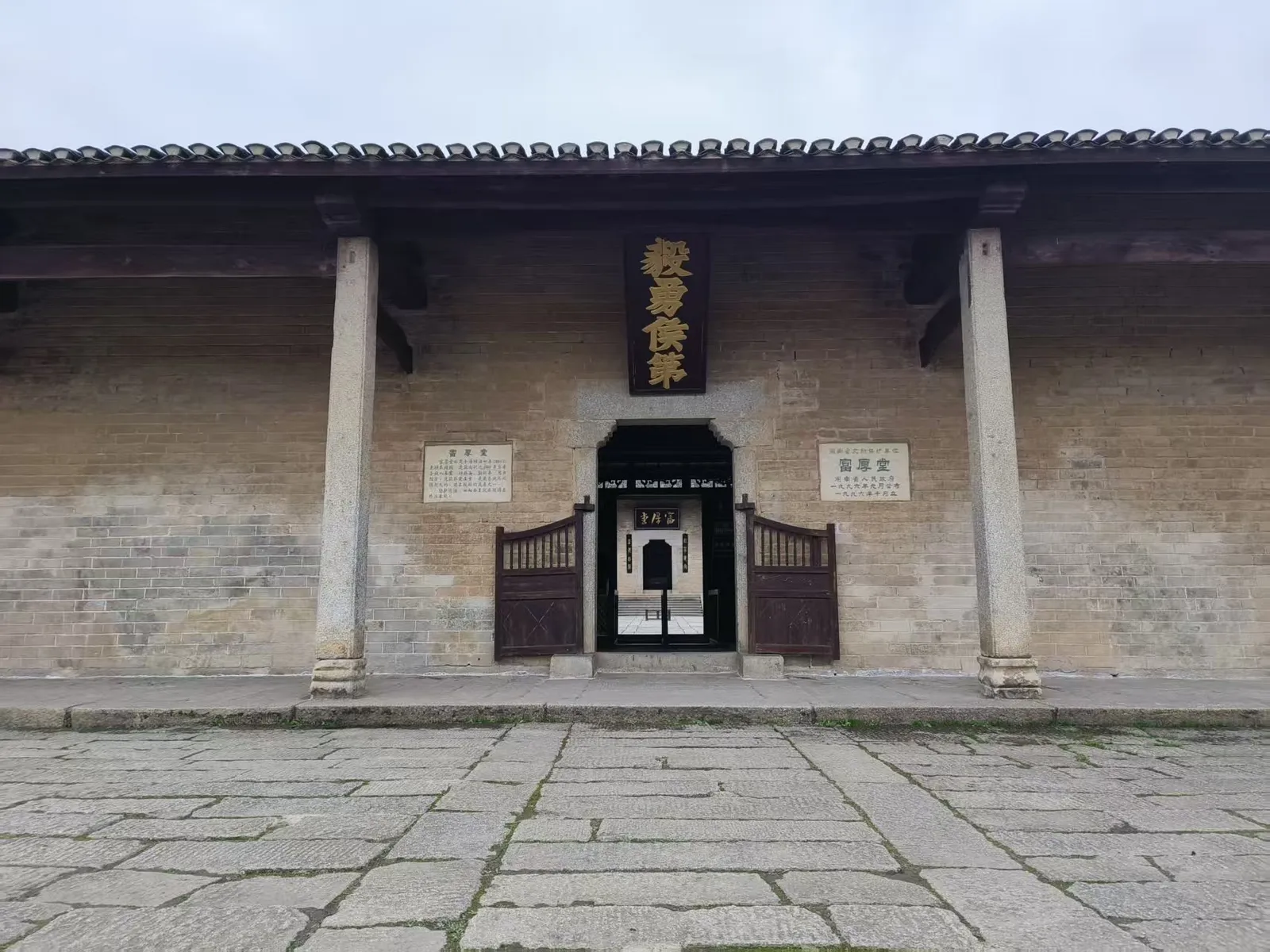
I’m not saying family tradition can’t be discussed. Quite the opposite: family tradition may be the most worthwhile thing about Zeng Guofan. But it is worth discussing precisely because it grew out of one household, one family, and can then be borrowed and learned from by other families — by everyone. Guo Yun, a daughter-in-law of the Zeng family, wrote out “The Fuhou Hall Daily Schedule” by hand; its last line reads, “Practiced in my house, it civilizes a whole township.” The weight is on “a whole township,” not on “my house.”
But changing “Zeng Guofan” to “the Zeng clan” flips that sentence in the opposite direction — from “civilizes a whole township” back to “practiced in my house.”
There is another layer here. Evaluating Zeng Guofan’s merits and faults is a public topic; anyone can weigh in. But talking about the Zeng family tradition easily slides into a clan topic, where you are usually asked your surname before you’re allowed an opinion.
One necessarily faces argument; the other is a market that is very hard to expand. That is the dilemma sitting right here.
Nine Hundred Meters and Three Kilometers
The promotion of Cai Hesen’s legacy is completely different from Zeng Guofan’s — at least it doesn’t have those thresholds in front of it.
But along the way it runs into another difficulty.
My home is only 900 meters in a straight line from Guangjia Hall, the former residence of Cai Hesen and Cai Chang, and three kilometers from Zeng Guofan’s Fuhou Hall.
By any reasonable reckoning, before 1949 my family’s spot here would have counted as the same village as Cai Hesen’s. Yet until I went to high school in the county seat and passed “Cai Hesen Square,” I didn’t know he existed.
Zeng Guofan’s stories, on the other hand, I grew up hearing.
My real introduction to Cai Hesen came only with the 2007 TV series “The Years of Passion,” and with the county government’s reconstruction of his former residence in 2016.
Only then did I learn that the man who first proposed founding the “Communist Party of China” had once lived right next door to my home.
Of course, I may not be the only ignorant one. In July 2020, replying to a suggestion from county people’s congress deputies, the county culture and tourism bureau wrote that “Guangjia Hall, being small in size, constrained in development space, and low in visibility,” could “only serve as one node in Shuangfeng’s red tourism.”
Nor is this anyone’s dereliction of duty. Cai Hesen died a martyr at thirty-six, too early to have told his own story. What he left behind was letters, and articles in Guide Weekly. Zeng Guofan left over a thousand family letters, decades of diaries, and the notes of a whole generation of staff advisors.
But the comparison I just made doesn’t really mean anything.
How important a person, a name, is nationally has little to do with the depth of memory and impression in my head. They are two different things.
It only shows that the “Zeng Guofan” IP got started earlier and covers a wider range.
For instance, Shuangfeng has two high schools named after them: one is Zeng Guofan School, the other Cai Hesen Senior High School. The former is a private school that has run for over twenty years; the latter is public and still under construction.
Another example: books about Zeng Guofan are piled to the rafters, while for Cai Hesen, apart from the Collected Works of Cai Hesen and his own History of Social Evolution, little is widely known.
But from the government’s side, the two IPs are treated with comparable weight.
The clearest case is the county seat’s central axis. Zeng Guofan Avenue and Cai Hesen Avenue went up in the same year, 2004, forming the town’s two main axes — one designated the “urban image display axis,” the other the “urban function expansion axis.”
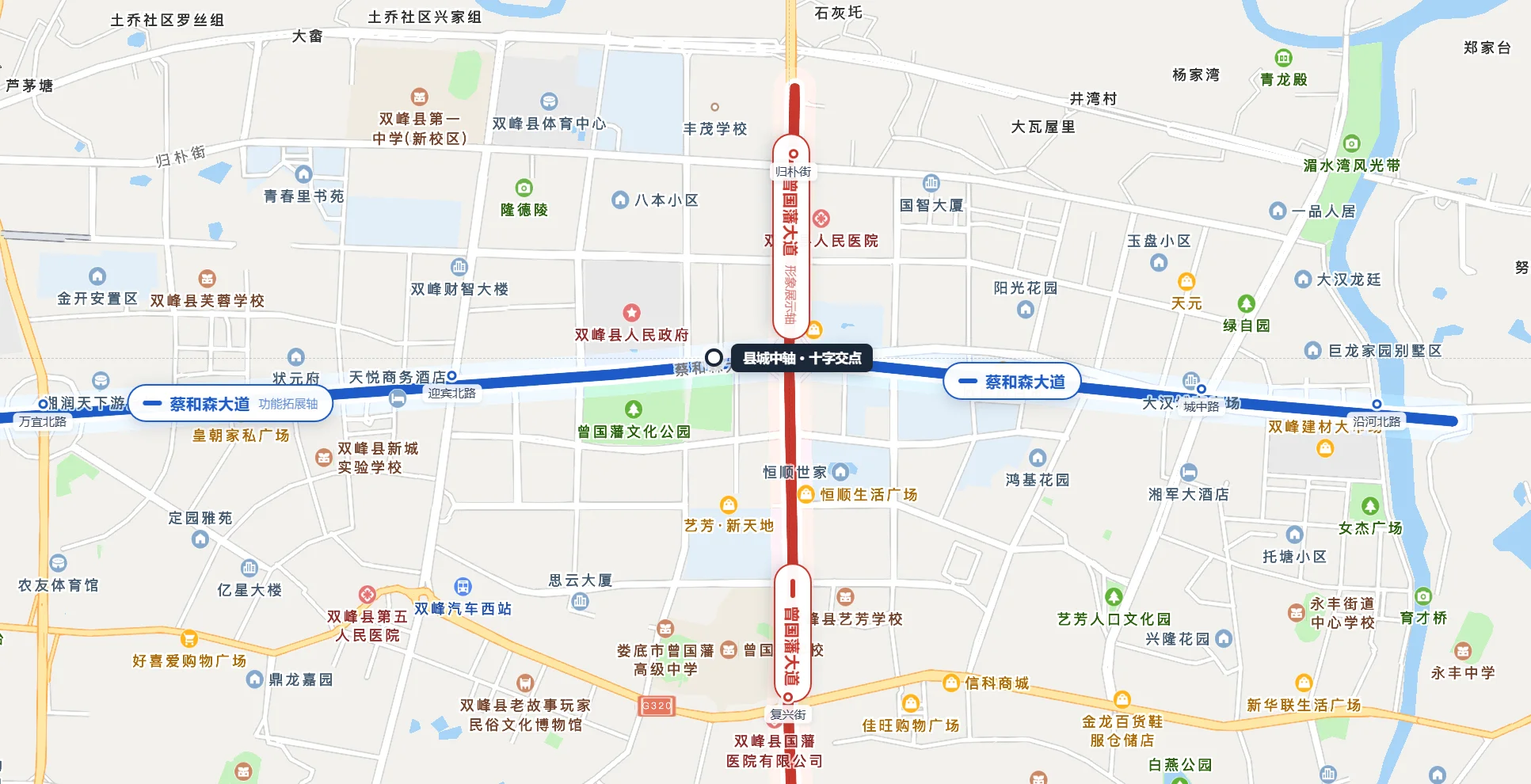
One horizontal, one vertical: on the county map they form a perfect cross. The two names hang at the same intersection, and their importance to Shuangfeng is plain to see.
Of course, Shuangfeng is not only about Zeng Guofan and Cai Hesen.
Its outstanding women alone include Xiang Jingyu, Cai Chang, Qiu Jin, Tang Qunying, Ge Jianhao, Qiu Canzhi, Zeng Xianzhi, and Zeng Baosun. Another landmark in the county seat, “Heroines Square,” has statues of all eight.
But without question, Zeng Guofan and Cai Hesen remain the two most dazzling figures of a county that was only carved out of Xiangxiang County in 1951.
Can Zeng Guofan’s Name Still Be Used?
But a map is a map, and a document is a document. I still can’t say how those three characters became “the Zeng clan.” Maybe symmetry of rhetoric: Cai Hesen is “one family,” so the Zeng side needed a “family” too. Maybe the working vocabulary of heritage listings, exhibitions, and cross-strait exchanges was simply habit, easy to write. Maybe the journalist changed it while tidying the recording. Or maybe someone genuinely felt the name is hard to place right now. Four possibilities, each plausible, none provable.
The result is the same either way. A county spends five years and several hundred million yuan to build itself into a “nationally known family-and-nation culture experience zone,” names the brand “family-and-nation culture,” and then writes the foundation as “the Zeng clan family tradition.” Read it through, and the weight all lands on “family.”
The most important things Zeng Guofan did in his life — raising the Xiang Army, founding the Anqing Ordnance Arsenal, sending the Chinese Educational Mission students to America, handling the Tianjin Massacre — all sit at the level of “nation,” and all are choices people can point at and curse. These things can be argued about, but they are all matters of “nation.” Strip them out and leave only “family tradition,” and family-and-nation culture is cut in half; the brand won’t stand.
I don’t think Zeng Guofan must be immune to criticism. The nickname “Zeng the Head-Shaver” didn’t come out of nowhere, and what happened after the fall of Tianjing is written plainly in the histories.
Nor do I think a county must mention his name every year.
But the question in the title still deserves an answer: the name can obviously be used — and it should be used in full.
The reasoning is simple. Fold his name into a surname, and the online controversy doesn’t disappear; it just moves from a public topic to an internal clan matter. And behind a genealogy there is no debate, only seniority. That doesn’t solve the problem; it moves it somewhere out of sight.
The confident approach is the opposite. Fuhou Hall is a big enough house to hold a person’s complete merits and faults, including the parts that don’t look good. A place that can, at its own doorstep, tell Zeng Guofan’s story whole and let visitors disagree is better qualified to hang the “family-and-nation culture” sign than a place that only talks about the Zeng family tradition.
I grew up beside these two former residences. By blood, I count as one of “the Zeng clan.” But I am not writing this as a descendant of the Zeng family; I am writing it as someone from Shuangfeng. What Shuangfeng people want is not a thicker genealogy, but a name that holds up.
The swallows that once nested in the halls of Wang and Xie now fly into the homes of ordinary people.