
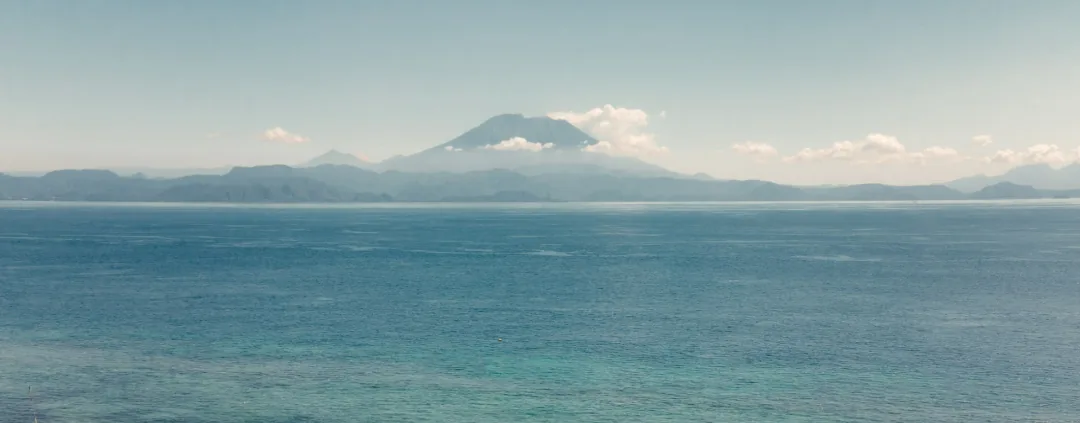
Today I read an article on the popular science website Knowable Magazine titled Volcanoes that made history, which discusses how several major volcanic eruptions in history altered the course of human societies. It’s not a long piece, but one passage gave me pause for a long while.
Some researchers have speculated that it was the Samalas eruption that helped seal the fate of the Mongol Empire, which ended after its last ruler perished in a 1259 epidemic in China that could have been linked with the eruption‑caused climate changes.
This idea instantly set off many thoughts.
A Thunderclap on the Equator
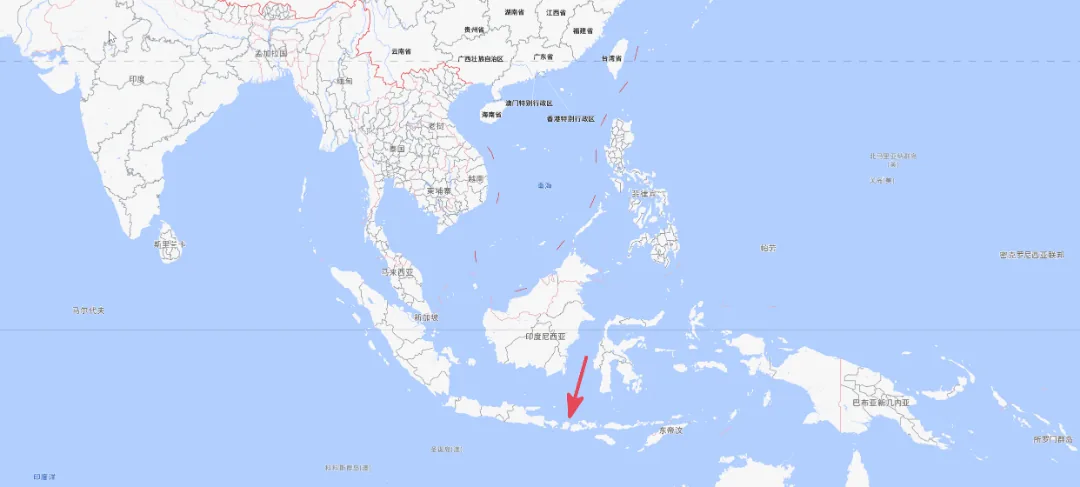
In 1257, the Samalas volcano on Lombok Island, Indonesia, erupted with colossal force. In terms of sulfur emissions, it exceeded 56 teragrams—about twice that of Tambora in 1815 and more than five times that of Krakatau in 1883. In the past few millennia, it may well rank first.
Vast amounts of ash and sulfur dioxide were injected into the stratosphere, forming an aerosol layer that acted like a giant umbrella, shading sunlight. Over the following years, global temperatures plummeted. Tree‑ring studies show significant cooling across North America and Eurasia from 1257 to 1259. England suffered famine from failed harvests, and Japan’s wet, cool summers ruined rice crops.
China was no exception. The West Lake in the Southern Song capital Lin’an (now Hangzhou) froze solid on January 13, 1258—an unprecedented event. Court historians recorded it solemnly as a “portent of calamity,” interpreting it as heaven’s warning against misrule. Meanwhile, crop failures in the Jiangnan region forced the court to establish orphanages to deal with an influx of abandoned infants.
But they had no idea where these disasters came from. Within their cognitive framework, “celestial changes” could only be attributed to “human affairs”—either the emperor’s moral failings, corrupt ministers, or endless warfare. The Southern Song could do no more than issue self‑critical edicts, dismiss chancellors, and offer sacrifices to heaven.
I searched through Song‑dynasty historical materials on the “Shidian Guji” website, looking for any direct record of this volcanic eruption. I combed through Southeast Asian polity names like “Sanfoqi,” “Shepo,” “Zhao‑wa,” and “Boni,” as well as keywords such as “sun without light,” “thin sunlight,” and “pumice” that might relate to volcanoes—but found nothing.
The reason is not complicated. Lombok, where Samalas sits, was still an independent kingdom at the time of the 1257 eruption, though it was later conquered by the Majapahit Empire of Java in the late 13th century. More importantly, Chinese historical records about Southeast Asia focused on tribute and trade, not geological surveys. Envoys and merchants paid attention to ports, cities, and products; they had little interest in or access to information about geological disasters on remote islands.
Thus, this event, which profoundly affected global climate and human societies, left no trace in the Song History or Yuan History. In fact, across all of Southeast Asia, the only written record is found on Lombok itself, in palm‑leaf manuscripts written in Old Javanese.
The Illness Below Diaoyu Fortress
But that is only the first layer of “not knowing.”
In the summer of 1259, the Mongol Great Khan Möngke led his army in a siege of Diaoyu Fortress in Hezhou, Chongqing. This small stronghold, nestled between hills and rivers, held out against the Mongol cavalry for months. At the height of summer, epidemic disease broke out among the troops. In July of that year, Möngke died in camp.
The accompanying shamans and Han Chinese advisors blamed the illness on “miasma”—the damp, hot air of the south, which northern horsemen were unaccustomed to. But in fact, no one knew that the real cause was more complex. It is highly likely that the equatorial volcanic eruption had disrupted the monsoon, making Sichuan that year unusually hot and humid, thus accelerating the spread of infectious disease.
Möngke’s death directly altered the course of history. After his death, the Mongol Empire immediately plunged into a four‑year civil war over the succession between Kublai and Ariq Böke. This vast empire, stretching from the Mongolian Plateau to the Persian Gulf, split permanently and never reunited. The forces attacking the Southern Song were forced to withdraw northward, giving the Song a reprieve of over a decade.
A War Neither Side Knew About
This is the most absurd part of the story—reminiscent of the Singer civilisation in Liu Cixin’s novels.
The Southern Song and the Mongol Empire, like Earth in the war against the Trisolarans, could feel drastic changes in their surrounding universe—crop failures, military plagues, darkened skies, frozen lakes—yet they never knew where the real blow came from. In The Three‑Body Problem, when the solar system is struck by a two‑dimensional foil, humanity is clueless; they only see the stars changing and physical laws failing. For the Southern Song and the Mongols, the 1257 Samalas eruption was their era’s “two‑dimensional foil.”
All their countermeasures—the Song’s political intrigues, the Mongols’ struggles for the throne—were futile responses to an invisible foe. Song ministers busied themselves with rectifying government and praying to heaven after West Lake froze; Mongol princes scrambled for the khanate and carved up the empire after Möngke’s death. No one noticed what was happening on the equator.
It was not their fault. There were no weather satellites, no concept of atmospheric circulation. The world was fragmented; information travelled by word of mouth and slow ships. The local Babad Lombok palm‑leaf manuscripts recorded the “cataclysm,” but at best it became a sailor’s anecdote in maritime trade—far too trivial to reach official circles.
Each civilisation interpreted the physical phenomena they observed through their own cultural and moral lenses, distorting the truth beyond recognition. European monks blamed famine on the “Scourge of God,” Japanese nobles recorded poor harvests as “national calamity,” and Song historians wrote West Lake’s freezing into the Treatise on the Five Elements as a sign of “yin overpowering yang.” Not a single person guessed the real answer.
It was not until 2013 that things turned around. That year, an interdisciplinary team used radiocarbon dating to link the ash, pumice, and other deposits around Samalas on Lombok to the great eruption of 1257. Sulfur deposits in ice cores, suppressed growth in tree rings—all evidence pointed to the same event.
Today, we can connect these dots not through ancient records, but through modern science. The Southern Song and Mongol Empire of 800 years ago died without ever knowing what struck them; eight centuries later, we have finally read the source of that storm through scientific inquiry.
The Samalas eruption terminated the process of a unified Mongol Empire and drained the last chances for the Southern Song to survive. But both empires, to their very end, never knew who their real enemy was. Like all other participants in history, they were pushed towards their respective fates by a geological upheaval from the equator, completely unaware.
Which Butterfly in the Butterfly Effect?
Looking back, traditional historical narratives often attribute Möngke’s death to a “two‑dimensional foil” kind of accident: a flying stone from Diaoyu Fortress struck down the Great Khan, changing Chinese history. One stone, one man, and an empire crumbled.
Even more curiously, later historical research added further mystique to that stone. Because Möngke’s death affected not only China’s trajectory but also the entire world. In 1258, Baghdad fell to the Mongols, ending the Abbasid Caliphate. Had Möngke not died at Diaoyu, Hulagu’s western campaign would not have been cut short; the Mongol cavalry might have pushed on through Syria, into Egypt, and perhaps even into Europe. But with Möngke dead, Hulagu had to withdraw his main force eastward, leaving only a small garrison. In 1260, at the Battle of Ain Jalut, they were defeated by the Mamluks. The Mongol advance halted in Palestine, and the heart of the Islamic world was saved.
Ultimately, the butterfly effect spun from this story is that a stone from Diaoyu Fortress saved Byzantium, saved the Islamic world, saved Christian Europe—and even more, the European Age of Discovery and the discovery of the Americas are somehow linked to this event.
That story reads like a piece of satisfying fiction: one man, one stone, tipping the fate of the entire globe. A chance flap of a butterfly’s wings, extrapolated layer by layer, leads to an overwhelmingly grand conclusion.
The real question is: was the butterfly really that stone on Diaoyu Fortress?
Möngke’s death appears as an accident at Diaoyu. But the fortress had held out for months—why was it that very summer that epidemic struck the army? Why was Sichuan so unusually hot and wet that year? The answers lie not on the walls of Diaoyu, but on Lombok Island, south of the equator.
If we must identify a butterfly effect, this volcanic eruption is the true butterfly. A stone is visible and tangible, fitting our simple expectations of cause and effect. But a geological event from the equator lay completely beyond the cognition of anyone in the 13th century.
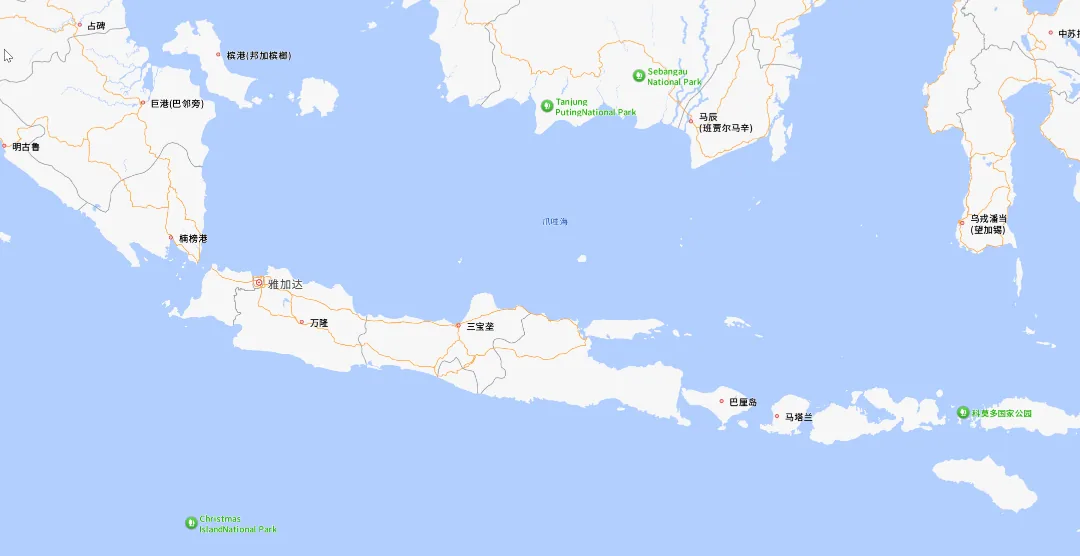
Yet history’s fascination does not end there. Thirty‑five years after the Samalas eruption, Emperor Kublai Khan of the Yuan dynasty dispatched over a thousand warships to invade Java, with his army advancing directly south of the equator. The same army that had been broken by the “miasma” in Chongqing now dared to cross the equator to attack Java. This, perhaps, is a circular irony of fate: they never knew that the “miasma” in Sichuan in 1259 might well have originated from the very sea they later set out to conquer.