
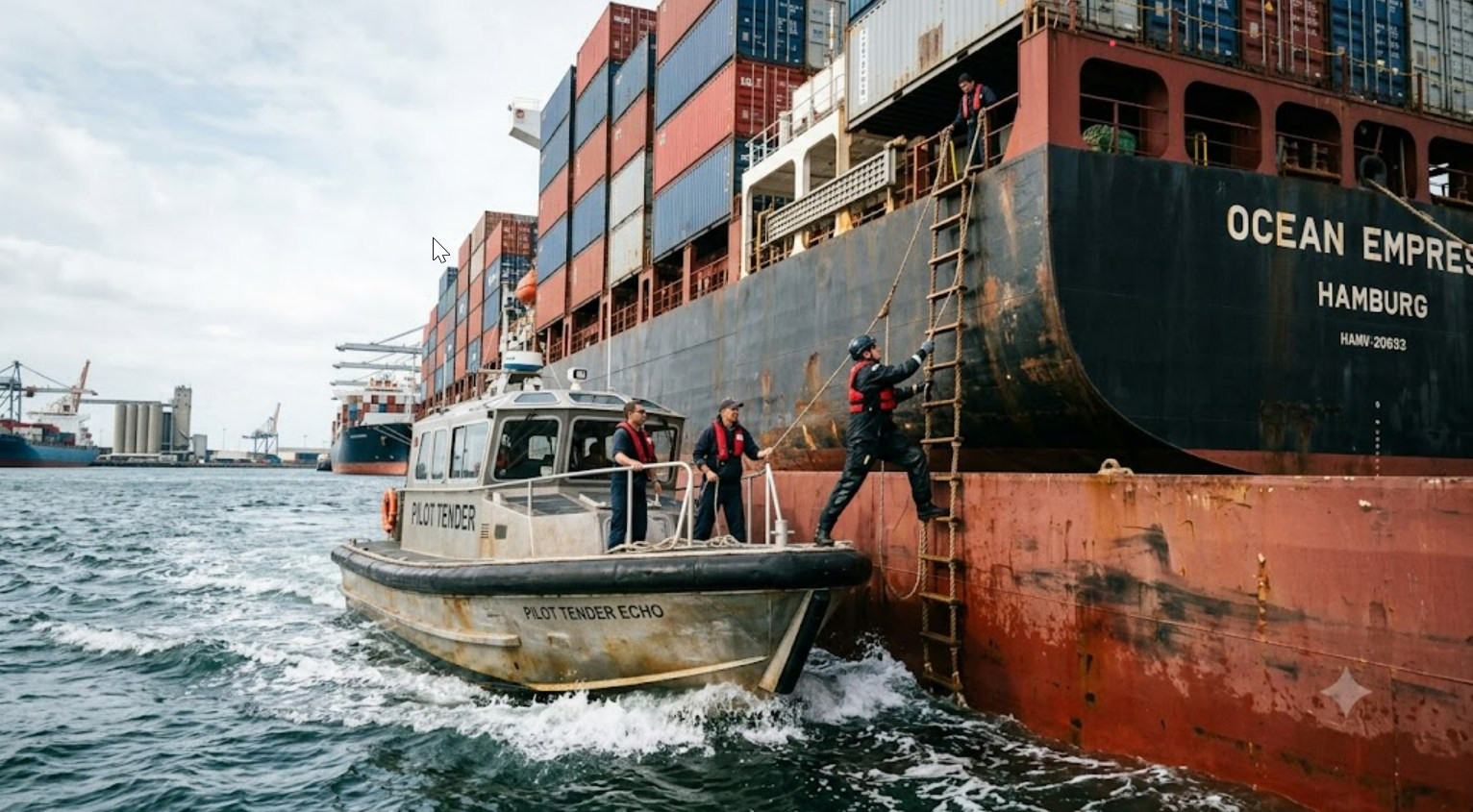
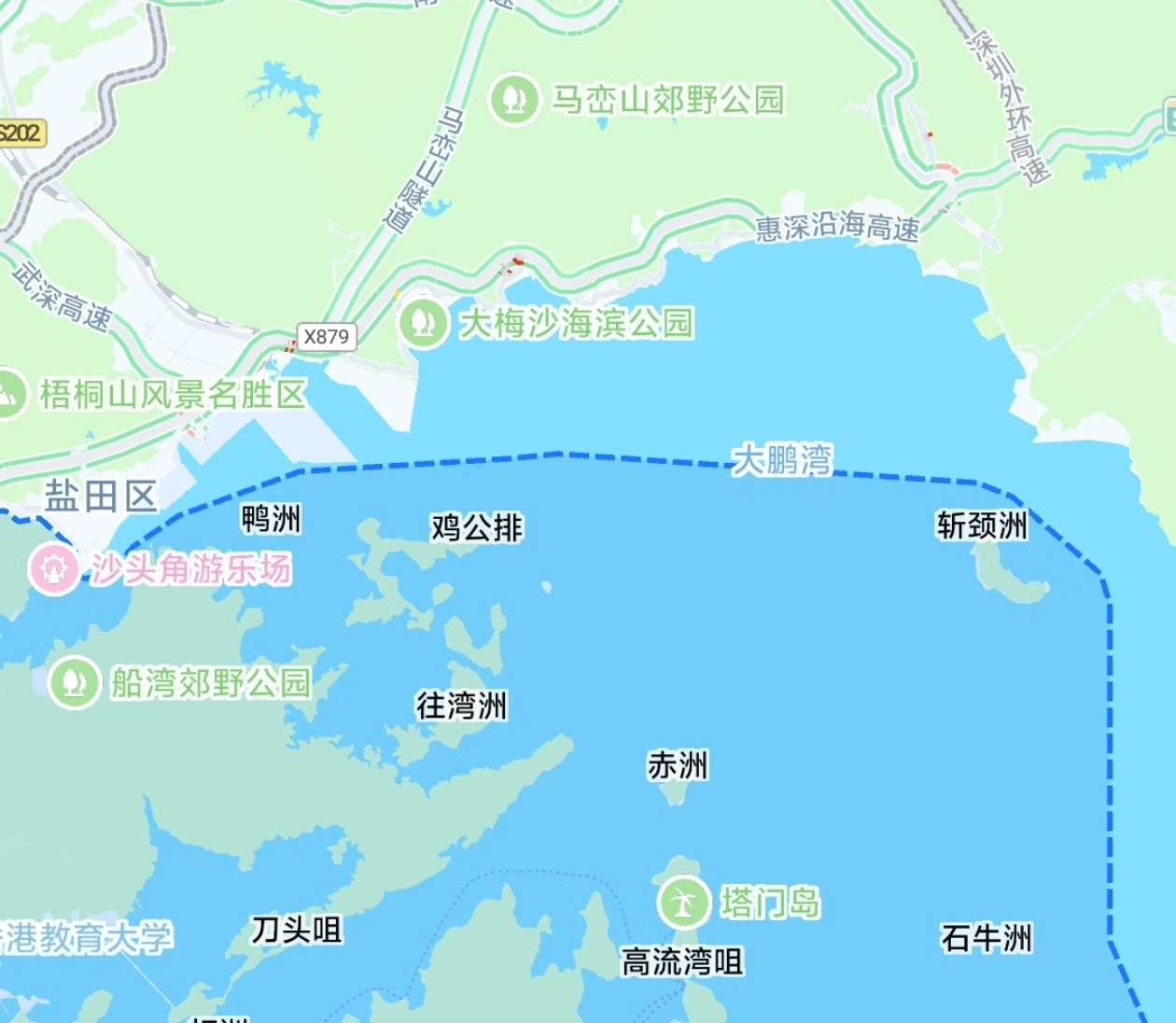
A few days ago, while discussing the matter of “seeking policies from higher authorities” with netizens in a WeChat group, I suddenly recalled the situation with ships calling at Shenzhen’s Yantian Port a few years ago. Because these vessels needed to pass through Hong Kong waters, the entire port entry process required a Hong Kong pilot to board first, followed by a Shenzhen pilot when the ship reached Shenzhen waters. This resulted in the issue of “secondary pilotage,” involving duplicate boarding and duplicate charges. Since pilotage itself is a high-risk industry, with each operation costing tens of thousands of yuan, this overlap of risks and duplicate charges effectively increased the cost of calling at the port. Consequently, some ships chose to bypass Yantian Port and opt for other ports. At the time, many suggested that Shenzhen should seek policy solutions from higher authorities to address this “historical problem,” but it seemed that the national level did not intervene.
However, I didn’t follow up on that issue after that period and assumed it remained unresolved. It wasn’t until I searched online that I discovered that in June 2022, Shenzhen and Hong Kong had reached an agreement to mutually recognize each other’s pilot qualifications. This allowed a single qualified pilot from either Shenzhen or Hong Kong to provide pilotage services for the entire route, with only a single charge levied on the piloted vessel.
This three-year agreement has now been renewed until 2028. During its first three years of implementation, pilots from both sides cooperated to pilot over 21,000 vessel movements, reducing costs by an average of about 30,000 yuan per operation and saving nearly one hour for each port entry and exit. Operational efficiency and safety have both significantly improved.
By normal logic, this issue should be considered satisfactorily resolved. However, while looking into this, I incidentally discovered that the “secondary pilotage” issue between Shenzhen and Hong Kong is not limited to the eastern waters; it also exists in the western waters. The most typical example is the terminals near the Shenzhen Bay side of Shekou Port, where vessels almost invariably pass through Hong Kong waters when entering or leaving the port.
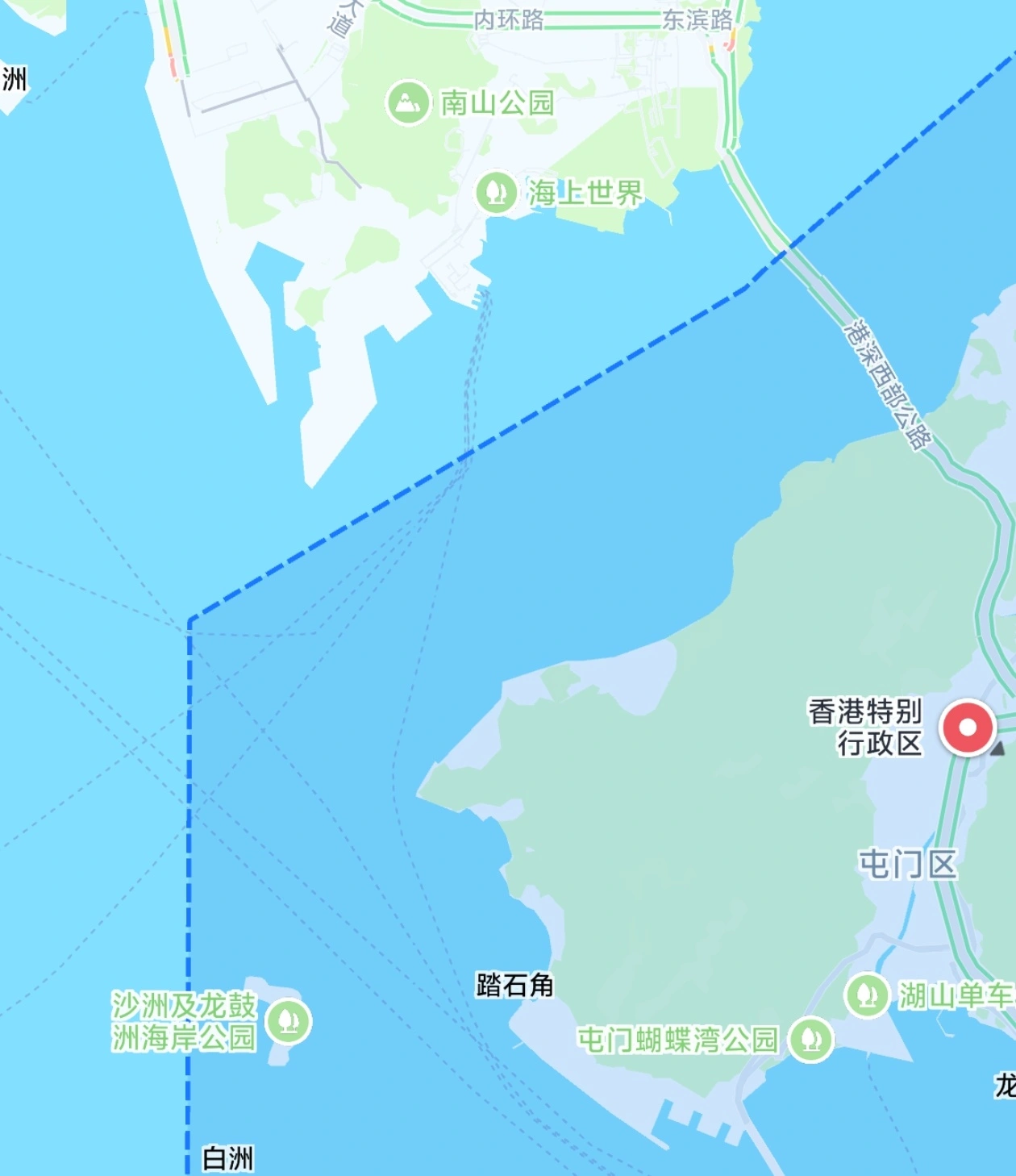
However, upon closer examination of this western sea area, I found the situation to be far more complex than anticipated. The same problem presents entirely different dynamics on the eastern and western sides.
Further investigation revealed that the “secondary pilotage” issue in the western waters is not a simple matter that can be resolved through management coordination alone. It is the result of historically formed waterway relationships, legal systems, port competition, and patterns of interests working in concert.
The Eastern Waters: Focus on Restoring the Status Quo
The reason the “secondary pilotage” issue could be resolved in Shenzhen’s eastern Dapeng Bay is largely because Dapeng Bay itself is a special case.
The development of Yantian Port has been intertwined with the unique geographical conditions of Dapeng Bay from the very beginning. Large international vessels entering Yantian Port need to navigate the Dapeng Bay waterway, a stretch of water where the management systems of Hong Kong and Shenzhen have long intersected. After Hong Kong’s return in 1997, and with the continuous growth of Yantian Port, the two sides effectively developed a long-standing tacit understanding.
For an extended period, although vessels entering and exiting Yantian Port passed through waters managed by Hong Kong, the two sets of pilotage procedures were not strictly enforced. Instead, pilotage was completed once according to the actual operational needs of the port. In other words, for over two decades, it wasn’t that there were no rules, but rather that a set of practices more aligned with actual needs had developed outside the formal rules.
The real change occurred around 2020. Hong Kong authorities re-enforced their pilotage management requirements, mandating that vessels entering Hong Kong’s compulsory pilotage areas must accept Hong Kong pilotage services. The previously long-established “single pilotage” model was thus disrupted, leading to the problem where vessels needed to undergo both Hong Kong and Shenzhen pilotage services before entering Yantian Port.
The 2022 Shenzhen-Hong Kong agreement did not design a new system from scratch but rather reaffirmed the long-existing cooperative model under the new legal requirements.
This is also why the eastern issue could be resolved relatively smoothly. The two sides were not facing an unfamiliar problem but rather an operational model that had previously existed and been mutually recognized.
For Yantian Port, Hong Kong waters function more like a shared passageway leading to the Shenzhen port. The goal was to restore efficiency, not to redistribute a mature set of vested interests.
The Predicament in the Western Waters: A Different Problem
If the issue in eastern Dapeng Bay was about restoring old practices, then what Shenzhen faces in the west is a completely different scenario.
The areas around Shekou, Chiwan, and Mawan primarily involve the western waterway system of the Pearl River Estuary. The most critical among these is the Urmston Road, which falls under the jurisdiction of Hong Kong’s Tuen Mun district and is an integral part of Hong Kong’s own port system. It is not a waterway existing solely for the convenience of Shenzhen’s ports. Hong Kong’s own port areas, including Tuen Mun and Tsing Yi, also rely on this waterway for access.
This highlights a fundamental difference.
The Yantian direction is closer to “Hong Kong waters serving Shenzhen Port.” In contrast, the western direction involves “a complex waterway system shared by Hong Kong’s ports, Shenzhen’s ports, and multiple other ports in the Pearl River Estuary.”
If Dapeng Bay is like a road leading to a single destination, the Pearl River Estuary is more like a large urban transportation network. It simultaneously connects Hong Kong Port, Shenzhen’s western port areas, Guangzhou’s Nansha Port, Zhongshan Port, Zhuhai Port, and the Macau direction.
Therefore, the western issue is not simply about replicating the Yantian model by merging one Hong Kong pilot with one Shenzhen pilot. It concerns the coordination of the entire Pearl River Estuary port cluster.
More importantly, the Urmston Road has long been part of the operational framework of Hong Kong Port. The pilotage systems, regulatory procedures, and industry interests formed over the past decades are all built upon this foundation. Changing the rules here would not just affect one Shenzhen shipping route but could potentially impact Hong Kong’s entire port service system.
This is also why, even though the annual costs involved are in the hundreds of millions for both areas, the implications are entirely different for each. In the east, it’s more about removing an additional cost. In the west, it could mean altering an industry system that has been in place for over a century.
One is about reducing burdens, the other about redistributing interests.
The Real Difficulty: Who Bears the Cost of Change?
Many people, upon seeing this type of issue, instinctively think: since both Hong Kong and Shenzhen are part of China, why can’t it be resolved through coordination at a higher level?
From a legal perspective, there is indeed room for manoeuvre. The Dapeng Bay agreement proves that it isn’t strictly necessary to completely overhaul the legal systems of both sides; mutual recognition of pilotage can be achieved through cooperative agreements. So, the law itself is not the primary obstacle.
The real difficulty lies in who bears the cost once the rules change.
Pilotage is not an ordinary commercial service. It involves professional qualifications, liability determination, regulatory authority, and stable income streams. If a vessel that previously required one pilotage in Hong Kong and one in Shenzhen were to have it done in a single operation in the future, someone would inevitably lose business.
Simultaneously, new problems would emerge. If a pilot operates across different administrative areas and an accident occurs, who is responsible for the investigation? How is liability allocated? How are insurance claims calculated? How is regulatory authority exercised?
These questions may seem detail-oriented, but for maritime administration, they are precisely the core issues.
Furthermore, while both Hong Kong and mainland China use Chinese, the legal traditions and administrative practices developed over time are notably different. Mainland maritime management tends to rely more on administrative systems to resolve issues. Hong Kong, in contrast, depends more heavily on statutory procedures and judicial mechanisms.
For example, faced with a vessel’s violation, the mainland authorities might directly impose an administrative penalty, whereas Hong Kong would more likely need to go through litigation.
This difference is not about which is superior, but rather reflects the distinct operational logic developed by the two systems over the long term. The real challenge in aligning rules within the Greater Bay Area is not finding identical legal provisions but getting people from different institutional backgrounds to accept a single mode of operation.
An Alternative When Rules Cannot Be Aligned
Shenzhen has not simply been waiting for rule coordination. In fact, the Shenzhen western port area has been actively enhancing its own waterway infrastructure, with the Tonggu Waterway being a very typical example.
In recent years, Shenzhen has continuously invested funds in the construction and maintenance of the Tonggu Waterway, with related project expenditures even exceeding the costs associated solely with pilotage fees.
If one only looks at the financial accounts, spending so much to maintain an alternative waterway might seem uneconomical.
However, port competition is never just about short-term costs. The value of waterway construction lies not in saving money today but in having more options for the future.
If a port is entirely dependent on another system’s arrangements, it becomes vulnerable to changes in external rules. Having an alternative waterway at least gives Shenzhen a certain degree of initiative. This is a common logic in port competition.
When institutional coordination faces uncertainty, building physical infrastructure serves as a form of insurance.
Of course, relying on engineering alternatives does not mean institutional cooperation lacks value. On the contrary, the more mature the alternative solutions become, the greater the potential negotiating space in the future. After all, truly effective cooperation is never based solely on one side’s compromise but on mutual recognition of shared benefits.
The Greater Bay Area Rule Challenge Behind a Single Waterway
Looking back at the “secondary pilotage” issue now, my initial thought was simply about the waste and inconvenience caused by a ship changing pilots unnecessarily. But upon deeper investigation, I realised it is not just a case study of rule alignment in the Greater Bay Area; it reflects a much broader proposition.
We are accustomed to viewing Hong Kong and Macau as provincial-level Special Administrative Regions, and that is certainly correct. However, if we only see that aspect, we overlook their other role. These two places are essentially platforms that bridge our mainland system, characterised by codified laws and administrative leadership (a continental-style system), with the modern Western system characterised by common law and international commercial practices (a maritime-oriented system).
Hong Kong’s common law tradition, commercial rules, and judicial system, as well as Macau’s legal connections with Portuguese-speaking countries, are institutional assets accumulated over centuries. These systems did not come into existence only after 1997 or 1999; they have been functioning for a long time.
When we speak of “Greater Bay Area rule alignment,” what we are actually attempting is far more complex than simply “signing a cooperation agreement between Shenzhen and Hong Kong.” We are trying to make two fundamentally different institutional systems function together within the same geographical space.
The seemingly minor issue of “secondary pilotage” touches precisely on this deep-seated structure. Pilotage is not just a technical operation; behind it lies a comprehensive institutional framework concerning navigation safety, liability determination, insurance claims, and industry management.
The eastern part of Shenzhen-Hong Kong could find a solution because both sides found the greatest common denominator of shared interests on this specific issue. The western part remains stuck precisely because it touches upon the core interests of Hong Kong’s port system and a set of industry rules that have operated for over a century.
If we cannot even harmonise the rules across a narrow stretch of water within our own territory, then when we face the alignment and competition of completely different rule systems on the international stage, the difficulty will only be greater.
This, in fact, is the most underestimated value of the Greater Bay Area initiative. It is not just about building bridges and roads or improving physical connectivity; it is a testing ground—a long-term experiment under the “One Country, Two Systems” framework to explore how different institutional systems can coexist, interconnect, and integrate.
The Dapeng Bay agreement in the east demonstrates that rule differences can be resolved technically as long as there is sufficient common interest and room for compromise. The predicament of the Urmston Road in the west reminds us that when the issue touches upon entrenched interests and core institutions, the cost of resolution rises sharply, and the timeline extends considerably.
Nevertheless, these issues must be navigated within the Greater Bay Area. This is also a necessary institutional exercise for China as it pursues national rejuvenation and transitions from a purely “continental power” mindset towards a more integrated “land-sea coordination” approach.
The complexity of this process may far exceed our initial imagination. But equally, its value will far surpass our initial estimates.