

Today I saw a front-page article on Hacker News about a late-Tang Dynasty shipwreck exposed by a storm in 2013 at Binh Chau, Quang Ngai province, Vietnam. The article was written by Singapore collector NK Koh, with detailed analysis of the ceramics’ dates, origins, and trade context. The article was very informative, but what really caught my eye was a key figure mentioned at the beginning — referred to as “local ceramics collector Mr. Lam Du Xenh”.
By common sense, the sound “Lam” in Vietnamese most commonly corresponds to the Chinese character “林” (Lin). I’m sensitive to surname issues because I’ve lived in Guangdong for twenty years and have many friends surnamed Lin, giving me an intuitive sense of surname distributions. My instinct told me this person was more than just a “local collector” — very likely of Chinese descent.
I searched his name and found a Vietnamese news article with a photo. One look at his face confirmed he was indeed ethnically Chinese.
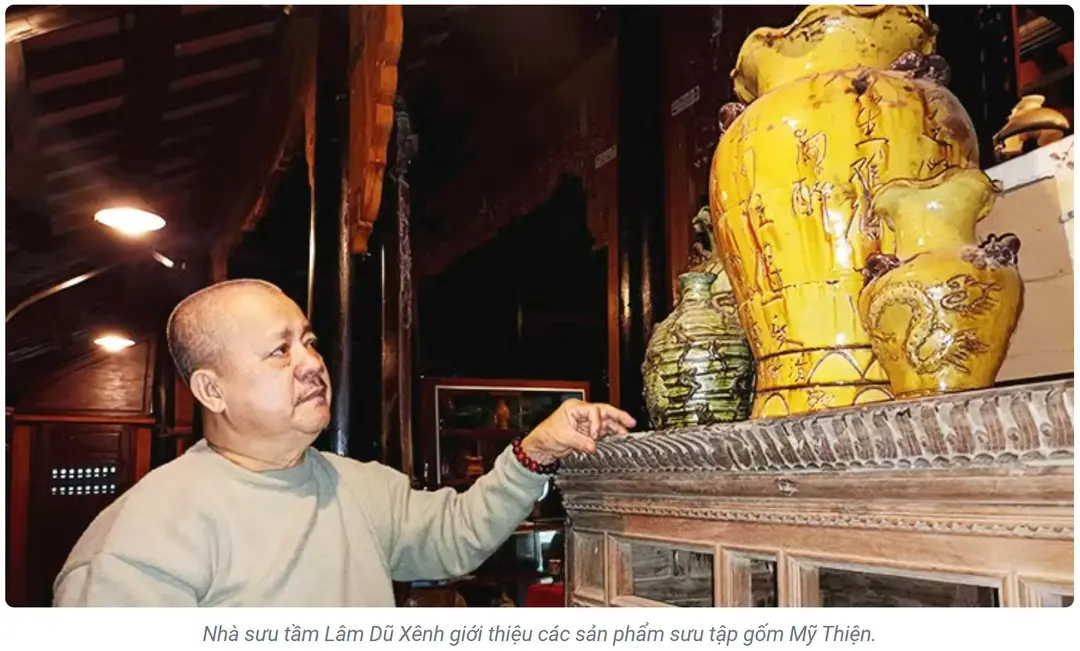
Following the trail, I found a YouTube video titled “2021 - Đầu năm du xuân thăm nhà sưu tầm cổ vật Lâm Dũ Xênh…” (Spring visit to antique collector Lam Du Xenh’s home). Sure enough, as soon as I entered his home in the video, I could see the remains of that Tang Dynasty shipwreck embedded in the courtyard wall, and hundreds of artifacts from the wreck inside his house.
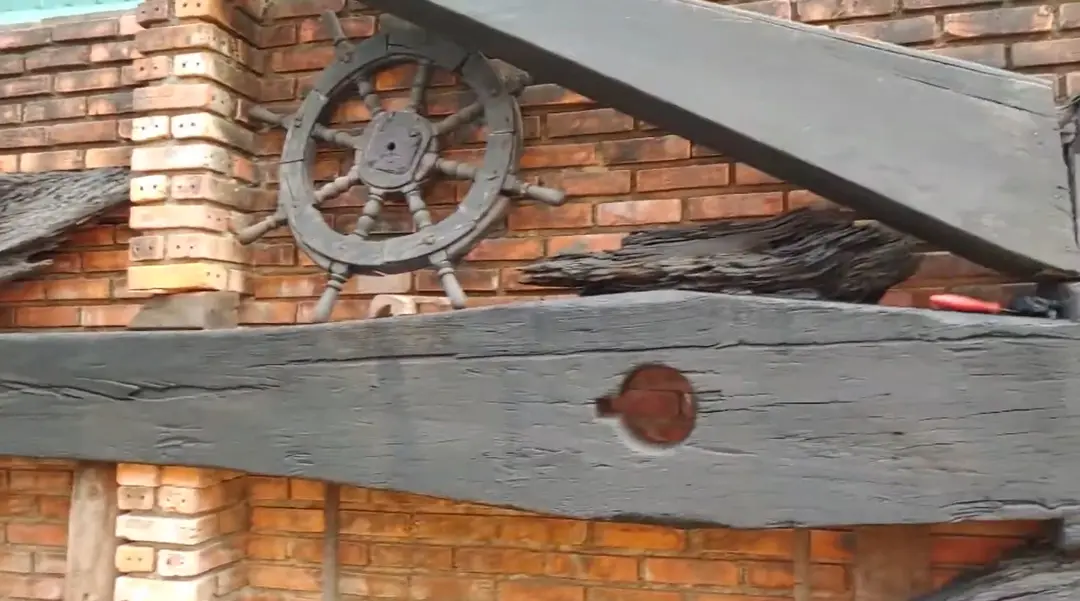
Of course, that’s not the focus of this article. What matters is a line I found in the video description:
Chủ nhân là người Việt gốc Hoa, tổ tiên sang Việt Nam từ thế kỷ 18. (The owner is a Vietnamese of Chinese descent, whose ancestors moved to Vietnam in the 18th century.)
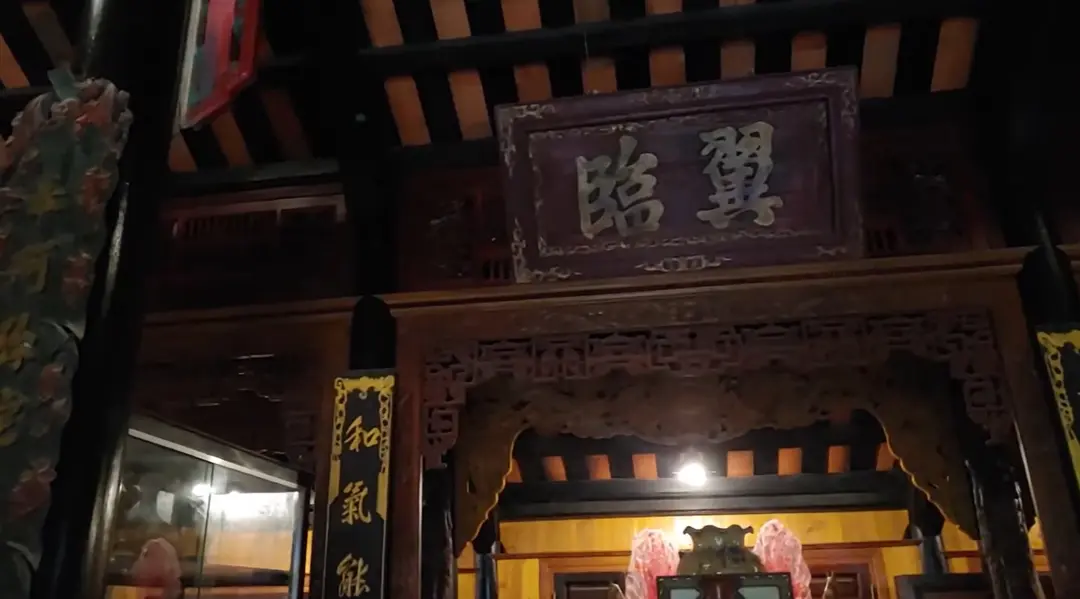
Even more telling was that the visitors greeted him as a fellow clansman (“họ Lâm với nhau”), addressing each other as clan relatives (宗亲). His main hall (大厅) was filled with Chinese plaques and couplets. Mr. Lâm Dũ Xênh clearly participates in the local Lin clan association.
That would have been the end of it, but I happened to continue watching the video and discovered that his Chinese surname isn’t “林” (Lin) at all — it’s “蓝” (Lan). His full Chinese name is 蓝杜训 (Lan Duxun).
This is intriguing. Why would a man surnamed Lan (蓝) walk into a Lin (林) clan hall?
Why Lin and Lan Became Indistinguishable
Chinese-language internet has very little discussion of Southeast Asian surname culture. Most people would probably attribute this to a “clerical error” during French colonial registration.
During the French colonial period (late 19th to mid-20th century), Vietnam promoted Quốc Ngữ (the Latin-based national script) to replace Chinese characters and Chữ Nôm. Many would assume that when French officials registered households, they couldn’t distinguish the subtle difference between “Lin” and “Lan” in Chinese dialects and simply wrote both as “Lâm”.
This explanation seems plausible but doesn’t hold up under scrutiny. After researching Vietnamese historical studies on this issue, I found the real reason goes much deeper. Centuries before the French arrived, “Lin” and “Lan” were already the same sound in Vietnamese phonology.
This involves a linguistic phenomenon called “Hán Việt” (Sino-Vietnamese). From the Tang Dynasty to the Lý Dynasty (approximately 9th–11th centuries), Chinese characters were the standard written script for educated Vietnamese, but because the pronunciations differed significantly from local speech, Vietnamese systematically adapted Chinese character readings according to their own phonological rules, forming a complete Hán Việt reading system. This system still forms the basis of Sino-Vietnamese vocabulary today.
In Middle Chinese (the phonology of the Tang era), the character 林 (lin) belonged to the shen-she qin-rhyme third division (深摄侵韵), reconstructed as lim; the character 蓝 (lan) belonged to the xian-she tan-rhyme first division (咸摄谈韵), reconstructed as lam. Both share the same initial (l-), but their finals differ: -im versus -am. However, the Vietnamese phonological system did not maintain the independent distinction between the -im and -am finals. In absorbing Chinese character readings, Vietnamese merged these two different rime categories. The result: 林 = Lâm, 蓝 = Lâm, pronounced identically.
This wasn’t a French transcription error — it was a “filtering” effect of Vietnamese phonology itself. Like how native English speakers can’t distinguish the tones of Chinese “sì” (四) and “shí” (十) — not because they’re careless, but because their phonological system lacks that distinction.
In the era when Chinese characters and Chữ Nôm were still in use, Lin and Lan, though pronounced the same, looked completely different in writing. The real turning point came in the mid-20th century, when Quốc Ngữ completely replaced Chinese characters as Vietnam’s official writing system. The visual distinction maintained by different characters disappeared. Both surnames became “Lâm” on ID cards, household registers, and passports. After a few generations, descendants only know their surname as Lâm — whether their ancestors were Lin or Lan is lost to memory.
A shared clan hall is the most tangible evidence of this process.
The “United Surname” Survival Mechanism
The phenomenon of “Lin and Lan sharing a clan hall” would be almost impossible in China itself. China’s ancestral hall system is based strictly on blood lineage — Lin is Lin, Lan is Lan, clearly demarcated.
But in Southeast Asian Chinese society, the situation is completely different.
Early Chinese migrants to Southeast Asia, far from their ancestral clan networks, found that a single surname group in a foreign land had very limited resources. Small surnames had too few people to build clan halls or form mutual aid networks. Faced with this situation, Southeast Asian Chinese developed an extremely pragmatic clan strategy: same-sound surname federation, same-origin shared halls.
The most classic example is “Six Laurels Hall” (六桂堂) — the Hong (洪), Jiang (江), Weng (翁), Fang (方), Gong (龚), and Wang (汪) surnames claiming common ancestry (a constructed blood narrative). Another is “Lieshan Five Names” (烈山五姓) — Lü (吕), Lu (卢), Gao (高), Ji (纪), and Xu (许). There’s also the “Zhaolun Association” (昭伦公所) — Tan (谈), Tan (谭), Xu (许), and Xie (谢). These organizations are found throughout Southeast Asian and North American Chinese communities, essentially surname-based mutual aid societies — using the form of clan organizations to perform the functions of hometown associations.
The emergence of Lin-Lan shared halls in Vietnam falls between two logics:
On one hand, it follows the pragmatic tradition of “same-sound surname federation” — since both are pronounced Lâm in Vietnamese, why not share a hall? It saves effort and resources while strengthening the group.
On the other hand, it has an objective phonological foundation — the merger of Lin and Lan in Hán Việt wasn’t a deliberately constructed “common origin legend” but the result of natural linguistic evolution. This gives the Lin-Lan shared hall less of the “story-making” quality of Six Laurels Hall or Zhaolun Association, and more the character of natural social fusion.
The Clan Hall: More Than Bloodline, It’s Insurance
Mr. Lan Duxun’s story provides an extremely vivid window into this phenomenon. From the video interview, we can see that in Quang Ngai province, he not only collects shipwreck artifacts but also acquires, restores, and reassembles ancient houses from various places — transporting old landlords’ residences from Ly Son Island and elsewhere, rebuilding them into a Chinese-style architectural complex. His main hall displays “Five Blessings Arrive at the Door” (五福临门) plaques, and his beams are carved with Chinese couplets. This isn’t pure cultural preservation — it’s a material expression of identity.
A Vietnamese of Chinese descent, centuries after leaving China, rebuilt a “Chinese” space in central Vietnam with every brick, tile, plaque, and couplet. In this space, he is a member of the Lin clan, even though his ancestral surname may have been Lan.
Overseas Chinese clan halls have never been just places for ancestor worship. They are mutual insurance systems — the food and lodging for new arrivals, education for children, startup capital for businesses, shelter for the elderly without support — all provided through the clan hall network. Which surname you bear doesn’t matter; what matters is that you have a place in this network. The Lin-Lan shared hall is the ultimate expression of this pragmatic clan logic.
Mr. Lan Duxun also hosted Japanese underwater archaeologist Professor Nishimura Masanari at this ancient house, collaborating on research of the ship’s timbers and classification of the wreck. A Chinese-Vietnamese collector, a Japanese archaeologist, a Southeast Asian wooden ship loaded with Chinese ceramics, and ink-written Arabic prayers — this cross-temporal combination explains the true nature of the South China Sea trade network better than any academic paper. It was never a narrative of a single civilization, but the interweaving of multiple ethnic groups, languages, and belief systems.
And the first brick of this story is that seemingly contradictory pair of surnames — Lin and Lan, side by side in the same clan hall. To Chinese readers, this may seem strange. But placed in the centuries-long survival history of Southeast Asian Chinese, it’s exactly what they do best: blur the differences, build consensus, and ensure everyone has a place.
This article is part of the “South China Sea Shipwreck Series”. The second article explores the true origin of the ceramics carried by the Binh Chau wreck — the Hunan Changsha kiln, severely underestimated by mainstream ceramic history (see Series II ). The third article focuses on the wreck itself, analyzing the fragmentation and reorganization of the late-Tang maritime trade network (see Series III ).
References: Author: NK Koh, The Vietnam Binh Chau (Chau Tan) Late Tang Wreck