
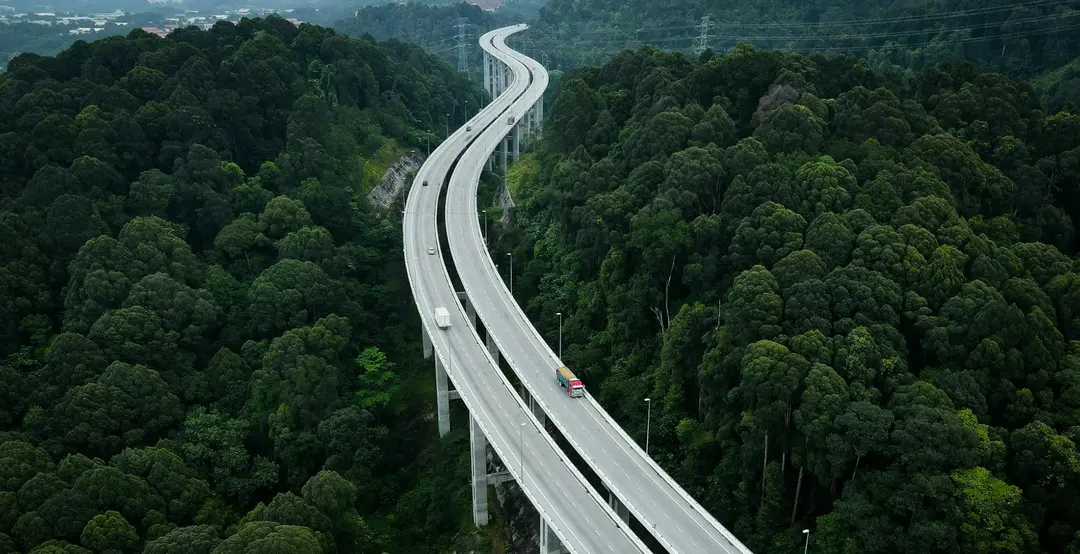
On the morning of the sixth day of the Lunar New Year, I set off from Hunan to Guangdong. What used to be a 650-kilometer journey taking seven to eight hours ended up setting a record of 18 hours this time. Previously, my longest record for this route was only 14 hours.
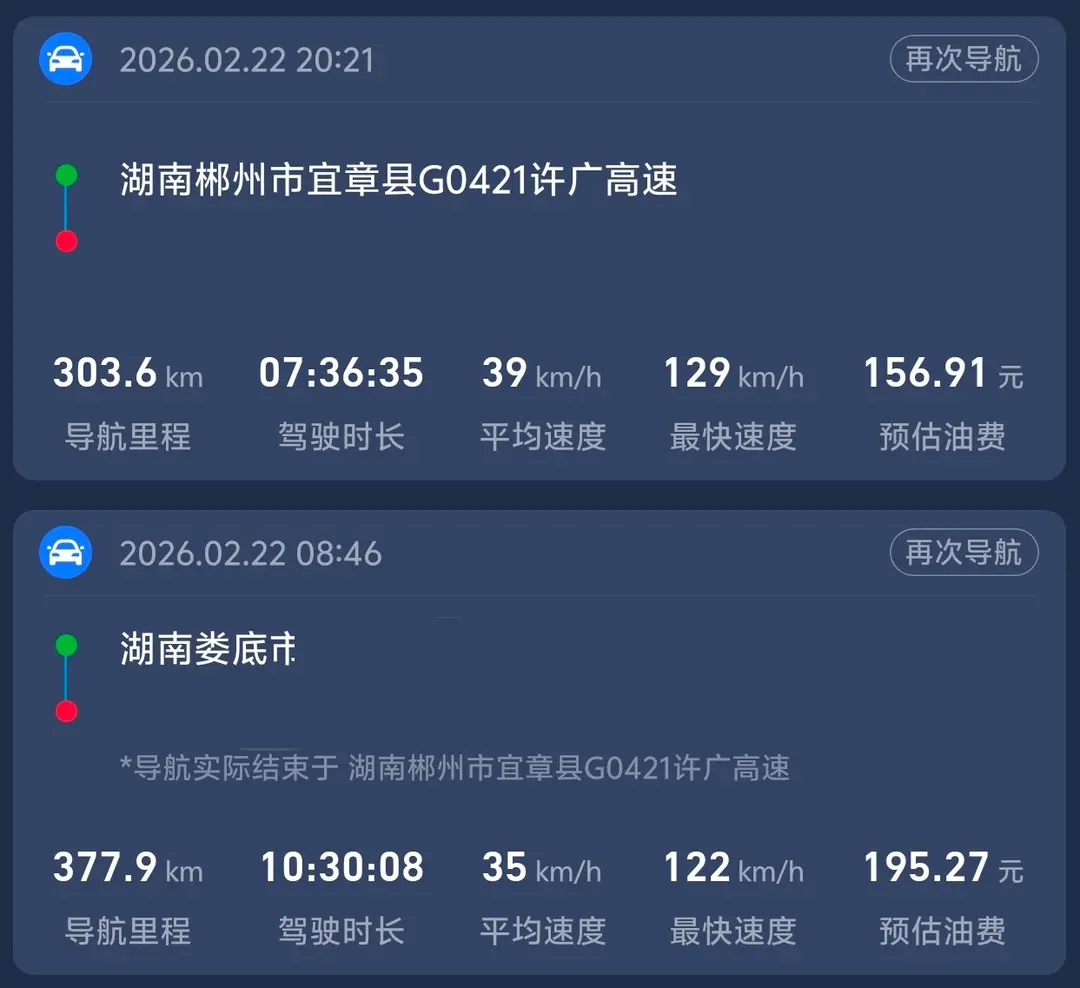
Undoubtedly, the main reason for this severe congestion was the higher traffic density. According to Hunan Daily, on the sixth day of the Lunar New Year, the traffic volume on Hunan’s expressways increased by 18.6% compared to the historical peak, with the single-day cross-province peak reaching 1.85 million vehicles.
There are only four expressways from Hunan to Guangdong, from west to east: Erguang, Xuguang, Jinggang’ao, and Wushen. Combined, these four expressways have eight lanes, with a maximum daily capacity of around 400,000 vehicles. This capacity has been insufficient in previous years, and with an additional 18% increase in traffic this year, congestion was inevitable. As a result, I had been driving for 10.5 hours and still hadn’t left Hunan.
Fortunately, after leaving Hunan, the situation seemed to ease slightly. The four expressways from Hunan to Guangdong connect to more expressways in Guangdong, mainly adding Guanglian and Leguang expressways. However, the Erguang Expressway in the west and the Wushen Expressway in the east also need to handle traffic from Guangxi and Jiangxi, which is why I haven’t dared to take the Erguang Expressway for many years. The section from Huaiji to Sihui on the Erguang Expressway consistently ranks among the most congested expressway sections nationwide during holidays.
The most unusual aspect of this congestion was the so-called “tidal lane” on the Qingyuan section of the Xuguang Expressway. While heading south to Guangdong, I could borrow the northbound lane of the opposite direction. However, I didn’t have a great impression of this experience because, during peak traffic, this “tidal lane” clearly became “one of the sources of congestion.”
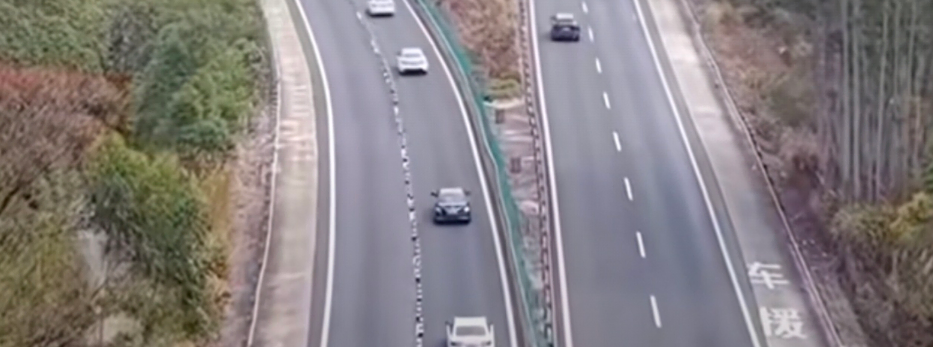
The “tidal lane” I used was as shown in the image above: a two-lane expressway in one direction, where the fast lane could borrow the fast lane of the opposite direction. However, the actual experience revealed three obvious issues:
The Source of Congestion Is at the Diversion Point
It wasn’t until I reached the diversion point of the “tidal lane” that I realized the several-kilometer-long congestion earlier was caused by vehicles slowing down to around 20 km/h when the southbound fast lane was diverted to the opposite lane using traffic cones. Some vehicles, upon seeing the need to turn left into the opposite lane, stopped abruptly and signaled to change to the slow lane on the right, further worsening the congestion.Slow Overall Traffic in the Tidal Lane
After turning left into the “tidal lane,” I realized that the fast lane I was originally in had effectively become a slow lane, while the slow lane on the right, after passing the diversion point, turned into the fast lane. The reason was that the “tidal lane” I used was originally the fast lane of the opposite direction, with traffic cones on the left and guardrails on the right, making it feel like driving on a narrow road just over 3 meters wide. It was naturally difficult to speed up, and with the added concern of vehicles in the original northbound slow lane separated by cones—especially at night with potential high beams—driving became even slower. After driving for a while, I encountered another standstill ahead, only to realize later that it was because vehicles had to turn right back into the original southbound lane. This secondary merging point caused another round of slow lane changes.Equivalent to an Extra Parking Lot During Heavy Traffic
Reflecting on this “tidal lane” experience, it felt like a two-lane road temporarily expanded to three lanes, only to revert to two lanes later. If there was congestion ahead at the point where the road narrowed back to two lanes, this section essentially functioned as an “expressway parking lot,” doing little to alleviate overall congestion. As long as traffic density didn’t ease, the number of lanes ahead didn’t increase, and vehicles in the tidal lane didn’t exit the expressway, congestion was inevitable.
Overall, though, such changes are undoubtedly a step in the right direction. At the very least, they show that the authorities are trying to find solutions within existing constraints.
Personally, I believe that for expressway “tidal lanes” to be truly effective, it’s crucial to avoid pitfalls like “long-distance lane borrowing, cone isolation, and concentrated merging.”
First, focus on bottleneck sections. For example, address “phantom traffic jams” near service areas or tunnels by allowing vehicles entering service areas to queue while letting others bypass the congested section.
Second, implement solid barriers. Replace traffic cones with movable steel guardrails, and split merging points into 2–3 staged entrances with sufficient acceleration lanes. This would eliminate slowdowns at diversion points and secondary merging congestion, making tidal lanes truly increase capacity rather than add to the problem.
Third, improve signage. During my experience, I entered the tidal lane almost blindly, only realizing the situation at the last moment when it was too late to change lanes. As mentioned earlier, the tidal lane itself was slow, while vehicles in the original slow lane, after our fast lane diverted to the tidal lane, sped ahead like wild horses, briefly enjoying two lanes. Unfortunately, they still encountered congestion at the secondary merging point ahead, as everyone had to merge slowly for safety, especially at night.