
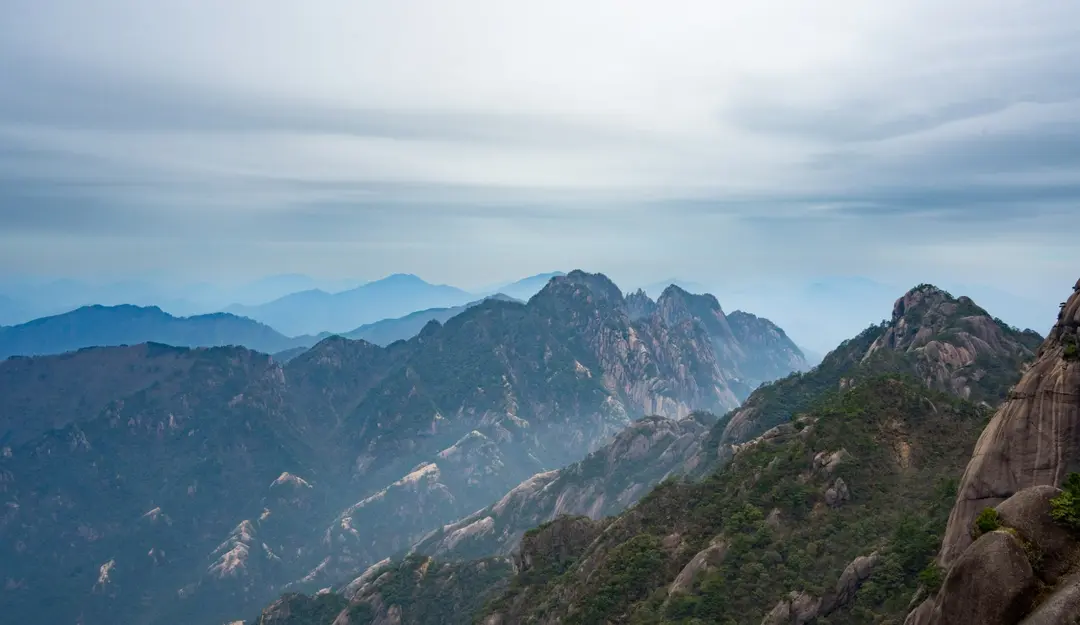
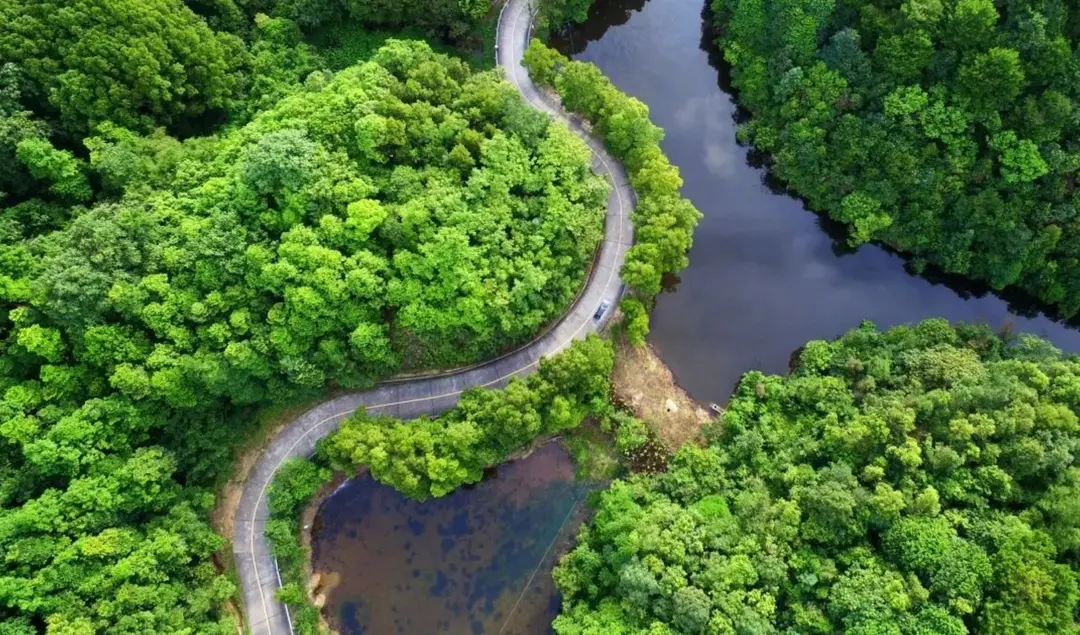
A while back, a friend and I drove dozens of kilometers to walk around Foshan’s “Saihanba” (Yunyong Forest Farm). Standing in the forest, my friend blurted out: “Isn’t this just lush mountains and clear waters?”
He said it casually, but I was stunned. Because on that same trip, we had just seen large stretches of eucalyptus forest. Both were mountains covered in green, so why would no one praise the eucalyptus forest as “lush mountains and clear waters,” while walking into Yunyong Forest Farm made people feel it truly deserved the name?
“Lush mountains and clear waters are as valuable as mountains of gold and silver.” Everyone can say this. But when many people say it, misunderstandings also grow. Many places understand “lush mountains and clear waters” as “just get green,” so when planting trees they look at only one indicator: is the coverage rate high enough? As for what kind of trees are planted, what color they look like from afar, and whether there is ecology under the forest, those are not within consideration.
But the “qing” in “lush mountains and clear waters” has never meant just any kind of green.
“Qing” is an aesthetic standard
In Chinese landscape aesthetics, “qing” is not the same thing as “green” in modern color theory. Qing can be blue-green, verdant, or it can be blue, or blue-black, but it has one common feature: when you look at the whole mountain from afar, there must be a dense, deep, layered sense of verdure. This visual impression is the result of canopy closure, leaf color layers, humidity, and light working together.
In Chinese painting, “blue-green landscape” uses azurite and malachite to apply color. What it paints is not the color of one kind of tree, but the composite tone presented by an entire mountain forest in air and mist. When the ancients said “qing mountains,” they were never looking at the color of a single tree, but at the color block formed by a stretch of forest canopy seen from afar.
This means that although “qing mountains” does not designate one particular tree species, it does have requirements for the type of trees. Among the trees we commonly encounter, evergreen broad-leaved forest is probably the closest, while pure pine forest leans toward dark blue-green and is “cang mountains,” not “qing mountains”; especially in the south, bamboo forest may look emerald, but traditionally it is mostly called “bamboo mountain.”
In my hometown, the mountains used to be basically “clustered trees,” that is, “Masson pine.” Although strictly speaking the overall impression was slightly different from “qing mountains,” the color did look very steady. It is just that in recent years, those “clustered trees” were almost all destroyed by pine wilt disease. In the past few years, whenever I went back home in spring and summer, I saw that the color of the mountain body was already completely different from what I saw as a child. Now the mountains have large stretches of camphor trees, maple trees, and bamboo, and the overall color leans toward bright green.
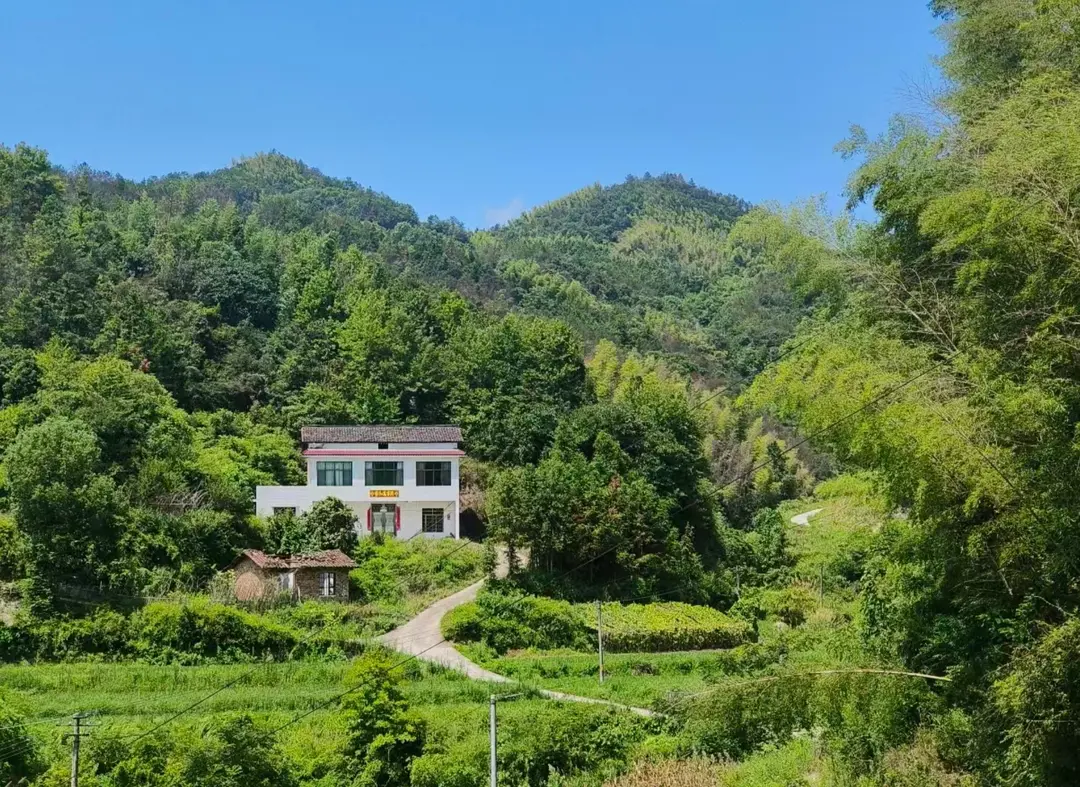
What surprised me most is that now, when I go back home in autumn, the color of the mountain body really has a distinctive flavor, and it actually fits the ideal “qing mountains” effect even better.
Behind “clear waters” is a hydrological standard
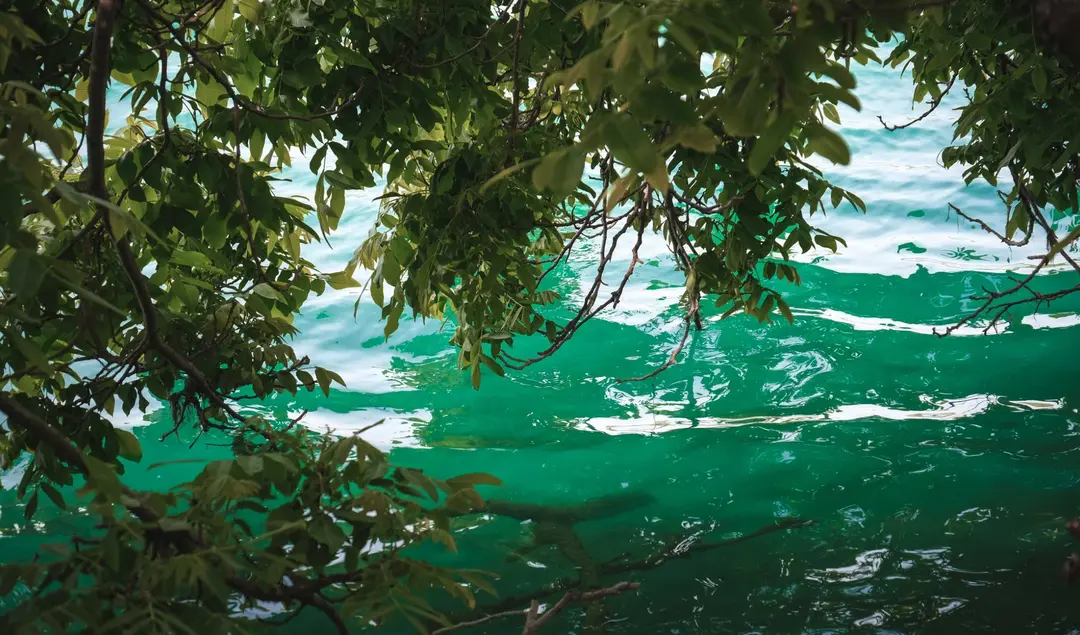
“Clear waters” likewise does not mean “as long as the water turns green.” True clear waters are fundamentally about clarity, stability, low sediment, and low eutrophication. It depends on forest canopy intercepting rainwater, the litter layer retaining water, soil pores infiltrating and supplying stable base flow, and roots fixing soil to reduce sediment.
If what is planted is high-density short-rotation pure eucalyptus forest, understory vegetation is sparse, soil disturbance is great, and nutrient export is high, so the functions of water conservation and soil retention are often inferior to native broad-leaved mixed forest. The water may be “green,” but that is the green of an algal bloom, not clear green.
So when the four characters “lush mountains and clear waters” are broken apart, behind each item is a specific set of ecological acceptance standards. And when “mountains” is brought down to the operational level, it is a question of tree species selection.
It is not enough to cover the mountains with trees to make lush mountains and clear waters
Guangdong’s forest coverage rate has always been quite high nationally. Whether on highways or high-speed rail, the mountains on both sides are covered in vegetation. But the problem is that although there are trees on the mountains, looking around, some places always feel like they have nothing to do with “lush mountains and clear waters.”
The most prominent problem here is “eucalyptus.”
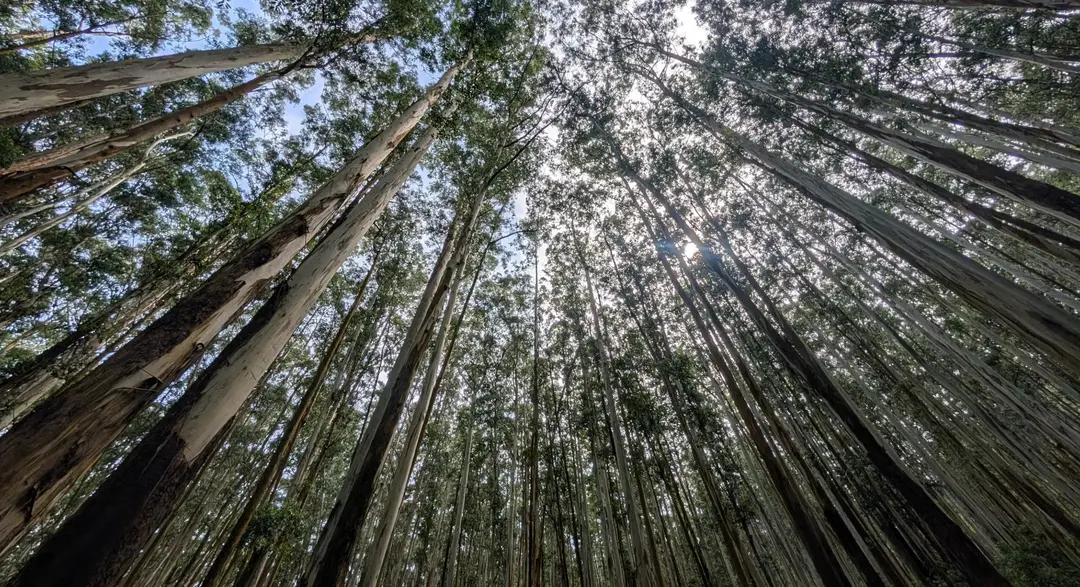
Undoubtedly, Guangdong is one of the earliest provinces in China to introduce and plant eucalyptus on a large scale. Starting in the 1950s, the Leizhou Peninsula began large-scale planting. In those years, the “fast-growing” advantage of eucalyptus also made it play the role of a “hero” in greening barren mountains and solving timber shortages. “Forest in three years, timber in five years.” In the peak growing season it can grow one meter taller in a month, and can be rotationally harvested in five or six years, with an extremely short investment return cycle.
But problems followed. Eucalyptus consumes much water and fertilizer, its leaves release allelopathic substances that inhibit the growth of other plants, and single contiguous planting forms a “green desert,” intensifying soil erosion, causing soil fertility depletion, and severely reducing biodiversity.
From the aesthetic standard of “qing mountains,” pure eucalyptus forest is likewise unqualified. Eucalyptus leaves are gray-green, the canopy is sparse, and there is almost no shrub or herb layer under the forest. From afar it is a stretch of gray-white-yellow-green, completely different from the “verdant” and “lush” in traditional landscape aesthetics. To put it plainly, this is an economic forest, not a scenic forest, and even less a “qing mountain.”
The “clustered trees” mentioned earlier have a similar problem. Pure Masson pine and slash pine forests look dark green and ink-green from afar. What the ancients called “cang song” corresponds to “cang mountains,” not the most standard “qing mountains.”
What is more troublesome is pine wilt disease. This disease, known as “pine tree cancer,” has spread to 19 provinces since entering China in 1982, cumulatively causing the death of more than 600 million pine trees and direct economic losses of hundreds of billions of yuan. Once a healthy pine tree is infected, it basically dies that same year, and after a pine forest is infected, it will all disappear within 3 to 5 years.
So the situation Guangdong faces is that eucalyptus has poor ecological benefits and the wrong color, while pine has high disease and pest risk and also leans toward dark blue-green. What alternative tree species to choose is indeed a headache.
Which trees are the “right trees”?
Back to the moment at Yunyong Forest Farm at the beginning. When my friend blurted out that this was “lush mountains and clear waters,” the answer was already before our eyes. After 20 years of continuous cultivation and monitoring, Foshan Yunyong Forest Farm screened 134 native broad-leaved tree species layer by layer, and finally selected 12 precious tree species and native excellent broad-leaved tree species suitable for the acidic red soil of the southern subtropics, including red castanopsis, schima superba, manglietia glauca, mytilaria laosensis, Syzygium hainanense, Michelia chapensis, cinnamonum burmannii, erythrophleum fordii, Schima superba from southwest, Acacia melanoxylon, Dalbergia cochinchinensis, and Michelia maudiae. This core tree species bank is highly consistent with the main afforestation tree species in Guangdong Province’s forest quality precision improvement action, providing prior verification for large-scale tree species selection in Guangdong.
These 12 trees share several common features: evergreen broad-leaved, dense canopy, and verdant leaf color. From an aesthetic perspective, the forest form they create, seen from afar, is exactly that verdant, deep “qing mountain” color. From an ecological perspective, long-term monitoring data show that in the superior afforestation model, unit-area growth increased by more than 60% over 12 years, biodiversity increased by more than 40% on average, and aboveground vegetation carbon sequestration increased by more than 40%. In restored 8-to-16-year-old artificial mixed forests, total woody plant biomass reached 77.9 to 262.1 tons per hectare, significantly higher than the 38.2 to 200.02 tons per hectare of pure Chinese fir forest, and the species diversity level approached that of the top community of subtropical evergreen broad-leaved forest.
Among them, red castanopsis deserves separate mention. Red castanopsis is a precious native broad-leaved tree species of the genus Castanopsis in the Fagaceae family in the southern subtropics. Its wood has high density, beautiful grain, and is hard and decay-resistant. It can be used to make high-end solid wood furniture and decorative panels, and its economic value is far higher than pine and fir, which are mostly used for ordinary building materials. In mixed forests, at the 4-to-5-year-old young forest stage, red castanopsis grows ahead, with faster growth in crown width, main trunk, and ground diameter, and the forest stand takes shape earlier. After more than sixty years of management and protection, Guangzhou Longyandong Forest Farm has built ten thousand mu of red castanopsis forest. The largest individual red castanopsis in the existing forest has a DBH of 63 centimeters and a tree height of 26 meters.
Acacia melanoxylon is another option worth attention. This tree species introduced from Australia has nitrogen-fixing root nodules, can improve soil and restore ecology, and is a preferred tree species for pine forest conversion. In the demonstration forest at Jiulianshan Forest Farm in northern Guangdong, in the fourth year of Acacia melanoxylon afforestation, the average seedling height was 12.4 meters and DBH was 17.2 centimeters, showing outstanding growth. In 13 to 15 years, medium- and large-diameter timber of 25 to 30 centimeters can be cultivated, and the selling price is about twice that of eucalyptus.
Michelia chapensis (also known as Michelia macclurei) is an important native precious broad-leaved main afforestation tree species in South China. It is naturally distributed in northwestern Guangdong and southeastern Guangxi. With advantages such as fast growth, good material, strong adaptability, and few diseases and pests, it has been included in the National Reserve Forest Tree Species Catalog and is one of Guangdong Province’s top ten main preferred afforestation tree species.
Where is the difficulty in forest transformation
The direction is actually clear, but real-world resistance is not small.
Economically, eucalyptus can be rotationally harvested in five or six years, with a short return cycle; while tree species such as red castanopsis and Acacia melanoxylon need 13 to 15 years to mature. For forest farmers who rely on the mountains for a living, the financial pressure is not small. Although the timber selling price of Acacia melanoxylon is twice that of eucalyptus, market awareness is still not high, processing and utilization technology is not yet mature, and promotion of planting still faces challenges.
In terms of policy, there have long been no obstacles. The No. 1 General Forest Chief Order of Guangdong Province in 2025 clearly requires “planting more native broad-leaved tree species, oil tea and other characteristic economic tree species, and precious tree species,” and proposes to “focus on transforming low-quality and low-efficiency eucalyptus forests on both sides of transportation trunk lines.” In 2025, Guangdong will complete at least 1.5 million mu of low-quality and low-efficiency forest transformation and 2.05 million mu of new afforestation tending, and plant 60 million superior native broad-leaved tree species, precious tree species, or economic tree species.
But beyond policy promotion, a cognitive shift is also needed: “lush mountains and clear waters” is not “just get green,” and even less is it “plant trees and it counts as ecology.” Tree species selection itself is an ecological decision. Planting eucalyptus is an economic decision; planting red castanopsis, schima superba, and Michelia chapensis is an ecological decision. The former produces timber, while the latter produces qing mountains, as well as the water conservation, soil retention, biodiversity, carbon sink, and landscape value brought by qing mountains.
Finally, although we say “lush mountains and clear waters” is a general reference, general reference does not mean arbitrary.
Only planting green, not caring about qing, only counting coverage rate, not counting ecological quality, what you get in the end is mountains green but not qing, and water muddy but not clear. And whether the color of a tree is right, in the final analysis, reflects whether our understanding of “good ecology” is deep enough.