Why Did the U.S. Choose the Name 'Epic Fury' for Its War Against Iran?
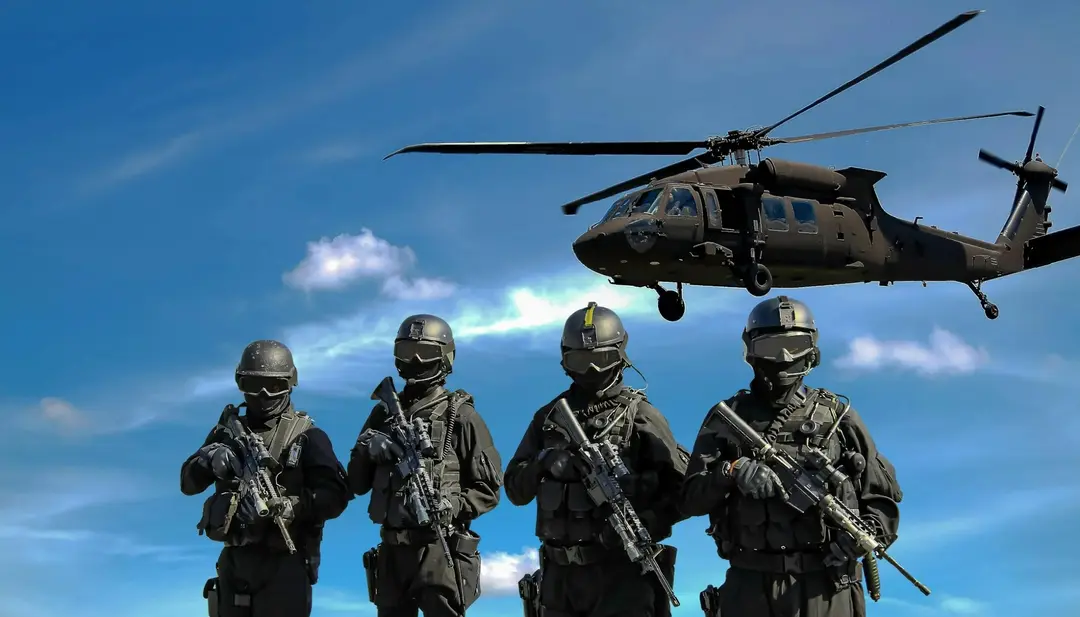
The naming of U.S. foreign wars has always carried value-laden connotations. For example, the 1991 Gulf War was codenamed "Operation Desert Storm," reflecting the region's natural geography. The 2003 Iraq War was called "Operation Iraqi Freedom," directly invoking the modern value of "freedom." The Afghanistan War was dubbed "Operation Enduring Freedom," emphasizing "endurance."
These names are not necessarily neutral, but they generally fall within the conventional rhetorical framework used by modern nations. They emphasize order, freedom, and determination, serving both domestic public opinion mobilization and the construction of international narratives.
However, "Operation Epic Fury" is entirely different.
"Epic" is a term of historical scale, suggesting events at the level of civilization, while "fury" is an emotional expression. The combination of the two makes the naming of this operation more akin to religious or mythological narratives rather than a purely military action.
When a nation begins to define a real war as "epic," it is emphasizing not just geopolitics but historical significance.
This shift in naming directly reflects a profound change in the American mindset.
The Modern U.S. Military Is Leaning Toward Religious Influence
Modern Chinese perceptions of the U.S. military have two key reference points: the "cowardly but well-supplied" military during the Korean War, and the "high-tech, modernized force" seen in the Gulf War and the subsequent Iraq War.
But by 2026, it may be necessary to add another layer to this perception: the U.S. military may be evolving toward religious influence.
According to a report by The Guardian, within just a few days of the U.S. declaring war on Iran, numerous grassroots soldiers from over 50 U.S. military bases filed complaints with religious organizations. They claimed that their commanders told them the war against Iran was a "holy war" aimed at bringing about the "end of the world and the return of Jesus."
For instance, one complaint stated:
"This morning, our commander urged us during the combat readiness briefing not to 'fear' the ongoing operations in Iran." "He urged us to tell the troops that this is 'all part of God's divine plan,' specifically citing passages from the Book of Revelation about the end of the world and the imminent return of Jesus Christ. He said, 'President Trump has been anointed by Jesus (anointing is an ancient Hebrew religious ritual involving the application of holy oil to establish the divine authority and legitimacy of priests, kings, or prophets) to ignite the signal fire in Iran, trigger the end of the world, and mark his return to Earth.'"
But the issue goes beyond this.
If it were just a few officers using religious language in briefings, it could be dismissed as individual behavior. However, when similar complaints emerge from dozens of bases and religious organizations receive a large volume of feedback in a short period, it no longer appears as an isolated incident but rather a shift in atmosphere.
The U.S. military has long been seen as a model of a modern military not only because of its equipment and technological capabilities but also due to its institutionalized, professional, and de-ideologized self-image. Individuals may have religious beliefs, but the rationale for war must be based on national interests. This distinction is a fundamental principle of modern national militaries.
Now, when American grassroots soldiers hear terms like "end of the world," "return of Jesus," and "divine plan" in combat readiness briefings, these boundaries are beginning to blur.
The Pentagon's decision to refrain from public comment, citing the Uniform Code of Military Justice (UCMJ), underscores the sensitivity of the issue. A direct response would require addressing a fundamental question: Is the military becoming religiously influenced?
And as recent public reports indicate, this trend is not without precedent.
Last June, there were reports that U.S. Secretary of Defense Heggeses held weekly Bible study sessions at the White House, openly promoting the theological logic that "God blesses Israel's allies and curses Israel's enemies." At the same time, Heggeses integrated Christianity into the highest levels of the U.S. military, broadcasting monthly prayer meetings throughout the Pentagon, with content similarly emphasizing "God's command for America to support Israel." This phenomenon clearly goes beyond personal faith and enters the language system of state power structures.
From "Father-Son Relationship" to Theological History
In the Chinese internet context, people often jokingly refer to Israel as America's "father," with the U.S. "obeying Israel's every command." While this phrasing is clearly tongue-in-cheek, it is not entirely baseless.
The primary reason lies in Christianity's origins in Judaism, which holds a unique significance in theology.
Chinese society, with its long-standing atheistic tradition, has a relatively superficial understanding of religious history. But the analogy of a "father-son relationship" makes it easier to grasp.
In Christian tradition, Israel is not merely a modern nation. Jerusalem, Israel, and the Middle East hold dual symbolic significance in religious narratives: historical and eschatological. For the Western world, supporting Israel is not just a foreign policy but a religious duty.
Within this framework, conflicts in the Middle East are no longer seen as mere geopolitical struggles but as "part of the historical process."
This is why, when the Chinese-speaking world uses the "father-son relationship" to explain U.S.-Israel relations, despite its crude expression, it inadvertently touches upon a certain truth. Behind U.S.-Israel relations, there indeed exist cultural and religious bonds that transcend practical interest calculations.
Epic Fury or Impotent Rage?
Setting aside religious narratives, even without discussing the Book of Revelation, "divine plans," or the "holy wars" of both sides, the nature of this war is not complicated when viewed through the lens of international law and the principle of sovereignty.
When one sovereign state launches a military strike against another sovereign state, it is, in essence, an act of aggression.
No matter the codename, no matter the historical significance attached, no matter the moral veneer applied, this fact remains unchanged.
The foundational logic of the modern international order is the equality of sovereignty. Any unilateral use of force in the name of "justice," "civilization," or "historical mission" fundamentally violates this principle. The only differences lie in the grandiosity of the narrative and the strength of the allies.
Whether "Operation Epic Fury" will become an epic ultimately depends on history itself, not the will of those who named it.
But one thing is certain: When a nation begins to frequently use theological language to justify war, and when "end of the world" and "return" rhetoric emerges within the military for mobilization, it reflects more than just a military operation.
It reflects a shift in mindset.
This shift is more dangerous than the war itself.
Because once war is imbued with theological meaning, it is no longer constrained by practical boundaries. Once "fury" is rationalized, it becomes a tool of policy.
In the Chinese context, there is a term: "impotent rage."
If grand historical narratives ultimately fail to deliver tangible results, if the so-called "epic" turns out to be nothing more than an emotional display, then what this war leaves behind may not be an epic.
Instead, it may raise the question of whether, under the influence of impotent rage, even more dangerous actions will be taken to preserve the integrity of the narrative.
#united states #iran #religion #israel