
Yesterday I saw a highly discussed article on the tech forum Hacker News, titled “The Vietnam Binh Chau (Chau Tan) Late Tang Wreck”, from the website of Singapore collector NK Koh. Frankly, the forum is usually full of tech and internet-related articles, and a historical piece like this is rare — which immediately sparked my interest.
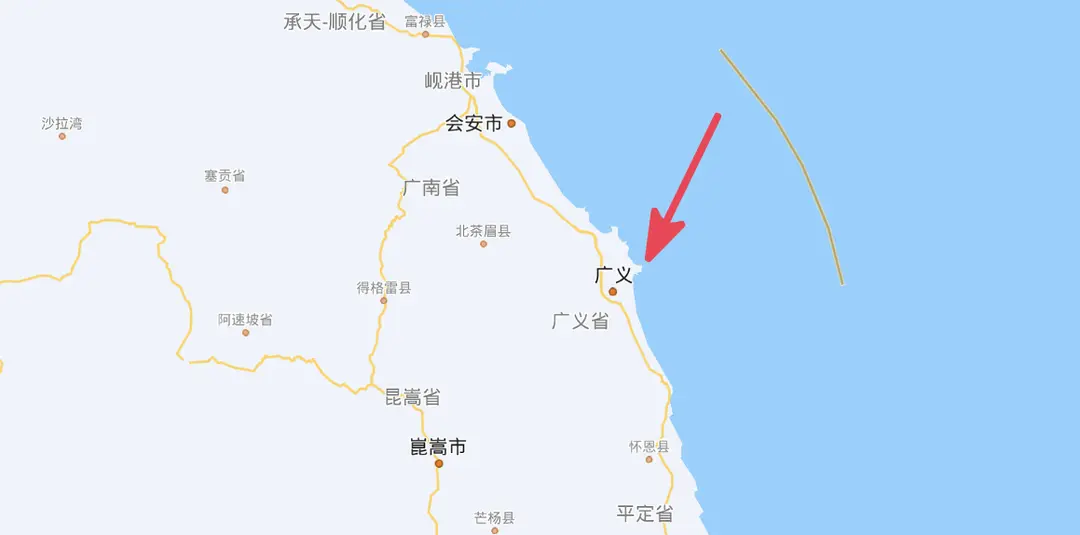
The article described an ancient shipwreck exposed by a storm in 2013 on the beach of Binh Chau, Quang Ngai province, Vietnam. This event has almost no coverage in Chinese-language internet, yet its relevance to Chinese history is extremely high. The long article detailed the types, dates, and origins of the recovered ceramics — highly informative. But for me, what was truly striking wasn’t the ceramics themselves, but the geopolitical picture presented by the ship itself.
A Storm and a Precise Date
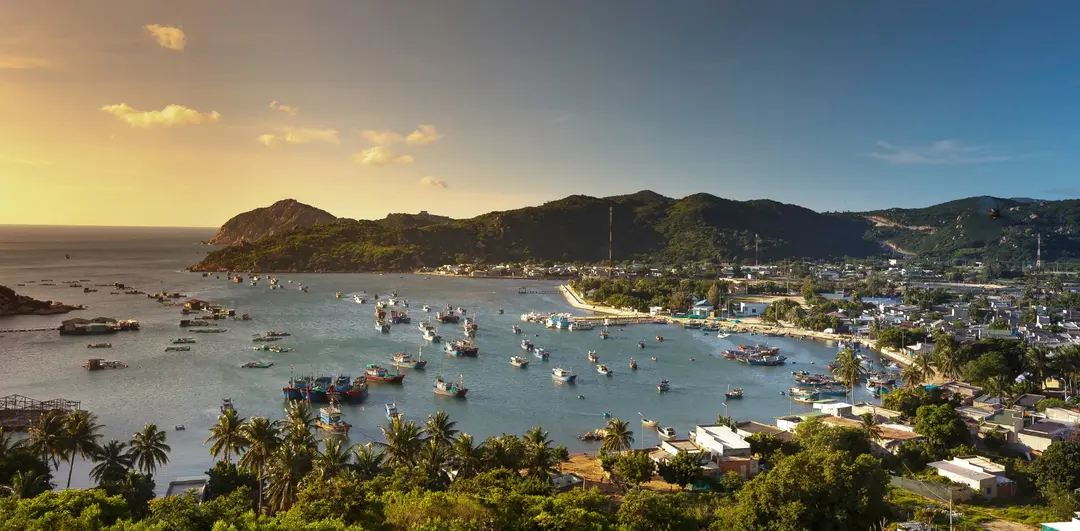
In 2013, after a major storm, villagers in Binh Chau, Quang Ngai, found exposed ship remains and large quantities of ceramic fragments on the beach. What followed was predictable: villagers scrambling, black market dispersal, private collectors stepping in.
In this chaos, Series I ’s subject — the Chinese-Vietnamese collector Lan Duxun (Lâm Dũ Xênh) — rescue-collected a batch of artifacts and even preserved part of the ship’s hull timbers. NK Koh made a special trip to Quang Ngai in 2014 to visit him, photographing, recording, and studying these artifacts.
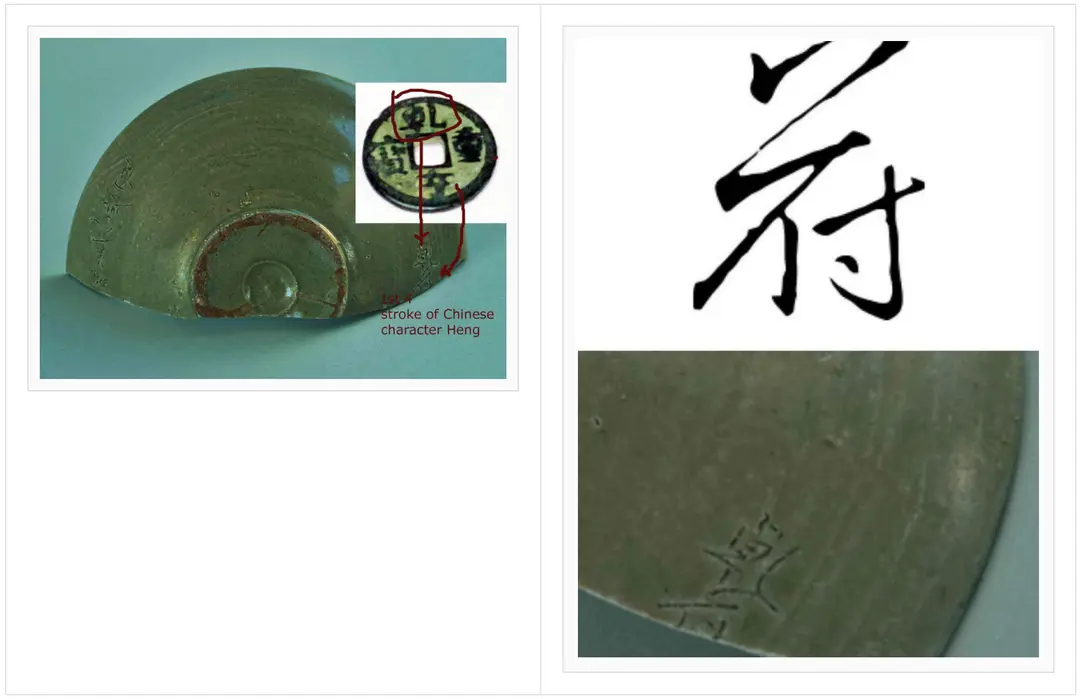
The ceramic dating work started from a fragment of a Yue celadon bowl base. Initially, researchers thought the incised characters read “Qianheng” (乾亨, 917–925 CE), which would point to the Southern Han kingdom during the Five Dynasties period. But later, PhD candidate Yang Yang from Jingdezhen Ceramic University re-examined the fragment and correctly identified the second character as “fu” (符) rather than “heng” (亨). Qianfu (乾符, 874–879 CE) was the reign name of Emperor Xizong of Tang. This correction pinned the shipwreck to the last twenty-plus years of the Tang Dynasty, with an error margin of no more than five years.
874–879 CE — this time window falls precisely within the peak of the Huang Chao Rebellion.
878: The Fracture of Guangzhou’s Trade System
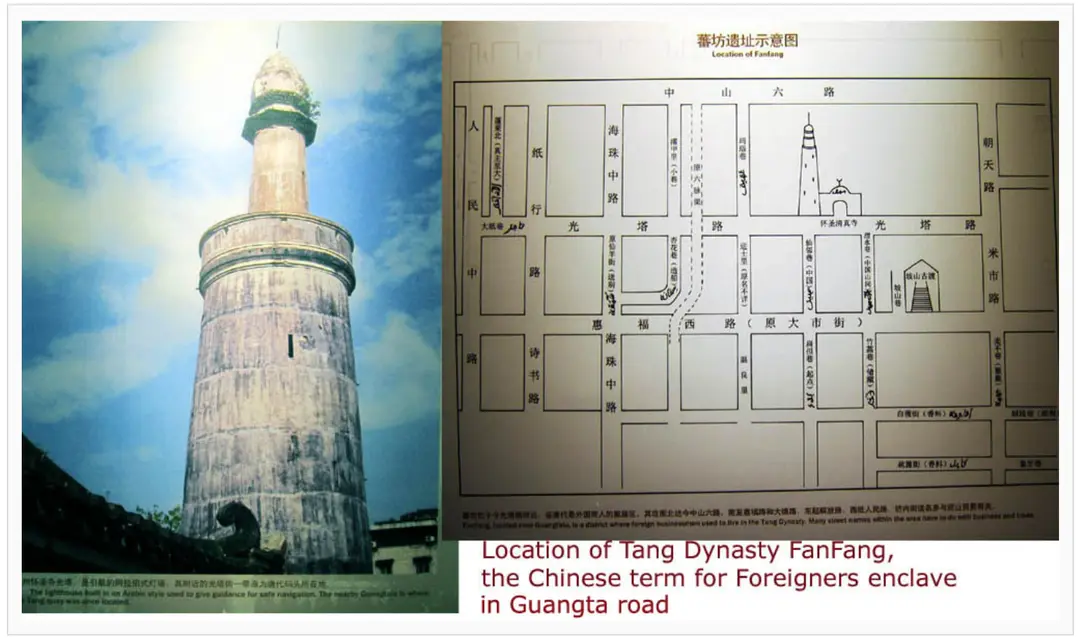
In 878 CE, Huang Chao’s army sacked Guangzhou. The contemporary Arab geographer Abu Zaid recorded that tens of thousands of foreign merchants perished in the assault.
Guangzhou was the Tang Dynasty’s largest foreign trade port and the primary gateway for Middle Eastern and Persian merchants. The 878 massacre effectively destroyed the direct trade route from the Persian Gulf to Guangzhou that had operated for nearly two centuries.
The large green-glazed jars from the ship provide the most direct material evidence for this narrative. Multiple jar bases bear Arabic inscriptions in black ink — identified by experts as religious prayers, roughly meaning “seeking safe passage for the vessel”. This wasn’t kiln-made decoration — it was a talisman written in ink by the merchants themselves. In an age when voyages depended on wind and experience, these prayers on the cargo are the materialization of fear. Having fled Guangzhou, merchants now redirected their goods via Annam and Champa routes, facing unknown seas and conditions — they needed not just favorable winds but divine protection.
The Southeast Asian Carrier Role
This ship’s most unusual feature is its hull structure.
The earlier Belitung wreck (c. 826 CE) was an Arab sewn-plank dhow — coconut fiber stitching instead of nails, typical of Persian Gulf and Indian Ocean shipbuilding tradition. But on the Binh Chau wreck, Japanese underwater archaeologist Dr. Jun Kimura identified Southeast Asian local shipbuilding technology — distinct from both Arab sewn-plank and Chinese junk traditions. This ship was built in Southeast Asia.

This leads to a key question:
This ship’s carrier was neither Arab nor Chinese — it belonged to a Southeast Asian maritime group. Specifically, the most likely candidate is the Champa people.
The Champa kingdom (c. 2nd–15th century) occupied what is now central and southern Vietnam’s coast — a civilization founded on maritime trade. Cham vessels were active on South China Sea routes for centuries, frequently mentioned in Tang texts alongside “Kunlun ships” — a term for Southeast Asian archipelagic seafarers. The Chams loaded Chinese goods at Chinese ports, transported them to transshipment stations on the Champa coast, and handed them off to Arab merchant fleets for long-distance transport. They were the real “carriers” of 9th-century South China Sea trade.
This discovery overturns an oversimplified historical narrative. Many people (myself included) used to think Tang maritime trade was simply “made in China → shipped in Chinese vessels → bought by Arabs.” The Binh Chau wreck shows a much more complex reality: likely a three-party division of labor — or even four-party. Changsha ware was produced FOB at Guangzhou, foreign Arab merchants paid for the goods and hired Southeast Asian vessels for carriage, the Southeast Asian ships carried the cargo from Guangzhou to the Indian Ocean, where it was further distributed to destinations. Chinese manufacturing, Southeast Asian carriage, Middle Eastern procurement. This division of labor closely mirrors modern global trade and supply chain logic.
The Dual-Hub South China Sea Trade
The Zizhi Tongjian (Comprehensive Mirror for Aid in Government) records a memorial from the late 8th century:
The Lingnan Circuit Governor reported: “Recently, precious goods carried by ocean-going vessels have mostly been taken to Annan for trade. We wish to send an official to Annan to collect customs, and request that a palace eunuch accompany him.” The Emperor was inclined to agree. But Chancellor Lu Zhi argued: “Foreign merchants seek profit alone. If we accommodate them, they come; if we harass them, they leave. Guangzhou has long been where ships gather. If they suddenly divert to Annan, either Guangzhou’s exactions have become too heavy or its hospitality has failed. Rather than chasing them to Annan, we should reflect on our own faults and reduce Guangzhou’s burdens. Moreover, both Lingnan and Annan are the King’s territory. There is no need to favor one over the other.”
Lu Zhi’s argument is profound: trade diversion is a market response. The reason Annan was replacing Guangzhou was excessive taxation in Guangzhou. The correct response was to improve Guangzhou’s business environment, not to chase merchants to Annan with special privileges. Most importantly, both Annan and Guangzhou were Tang territory — there was no need to imbalance local interests with central intervention.
This shows that by the mid-Tang period at the latest, Annan already had the capacity to compete with Guangzhou for trade. This naturally foreshadowed later historical developments.
However, a common geographical confusion must be clarified. Annam and Champa were two completely different entities.
Annam corresponds to modern northern Vietnam (roughly the area north of Thanh Hoa), directly administered by the Tang Dynasty as the Annan Protectorate, with its capital at Songping (modern Hanoi). In the late Tang, it became the Jinghai Military Governorship, which gradually became autonomous after the Five Dynasties period and finally independent. The Champa kingdom, on the other hand, was an independent state maintaining tributary relations with the Tang, controlling what is now central and southern Vietnam’s coast — including the area where the Binh Chau wreck was found (Quang Ngai province, south of Da Nang).
Even before the Huang Chao Rebellion, Guangzhou and Jiaozhou (Annan’s main port) were already a dual-hub structure for foreign trade. Although Guangzhou was the nominal official foreign trade port, the market voted with its ships, steadily elevating Jiaozhou’s importance.
After the Huang Chao Rebellion, Jiaozhou’s importance in foreign trade further surpassed Guangzhou’s. Now even Guangzhou’s goods had to be shipped to Jiaozhou first for consolidation and initial sorting, then carried by Champa carriers southward along the coast, through the Sunda Strait or Malacca Strait, and handed over to Arab merchant fleets bound for the Persian Gulf and Red Sea markets.
The memorial quoted above — “precious goods carried by ocean-going vessels have mostly been taken to Annan” — reflects this northward shift of the trade hub. And the Binh Chau wreck’s location on what was then the Champa coastline situates it precisely in the middle link of this relay chain. A Southeast Asian local vessel carrying Chinese ceramics, having just left a central Vietnamese transshipment port, sank in Champa waters before it could enter the deep-sea leg. The wreck’s location itself is the coordinate of this fractured route.
One Ship Freezes the Late Tang Transformation
The ceramics on the Binh Chau wreck form their own dating calibration. Changsha ware dominated in quantity, but its late-stage feature of abstract brown-green splashes replacing fine floral motifs is a clear signal of technical decline — which I analyzed in detail in Series II .
Yue celadon was scarce and visibly degraded — crude bodies, uneven glazes — a sharp contrast with the thin, refined Yue wares from the Belitung wreck, showing that late-Tang social turmoil had already affected the Zhejiang kilns.
Xing white ware had also lost its former “like silver, like snow” glory — glaze yellowed, bodies thickened. Xing never recovered, and was completely replaced by Ding ware during the Five Dynasties period. Meanwhile, the Arabic prayers written in ink on the bases of Guangdong green-glazed jars are the merchants’ materialized anxiety — directly written on the jar bottoms.
This across-the-board degradation of ceramics was no accident. The late Tang’s successive wars destroyed the economic order of the north, and handicraft production and logistics systems collapsed wholesale. The inferior ceramics on the Binh Chau wreck are the material trace of the Tang Empire’s collapse.
A Southeast Asian wooden ship loaded with Chinese export ceramics, sunk off the coast of the Champa kingdom. The ship was Southeast Asian-built, the cargo made in Hunan, Zhejiang, and Hebei, the buyers Middle Eastern, the prayers Arabic — and at the time the ship sank, Guangzhou was burning.
This is the last frozen moment of the late-Tang Maritime Silk Road. “Fracture” is not a metaphor: after Huang Chao’s massacre in Guangzhou in 878, the direct route that had operated for two centuries was indeed broken. But trade didn’t stop — it fractured into segments, each managed by different civilizations’ seafarers, reconnected along the central Vietnam coast.
The Binh Chau wreck is the frame frozen on this fractured line. A hundred years later, Annan would eventually break away from Northern Song control, causing a series of lasting consequences — to this day one of the most painful wounds in Chinese civilization’s historical memory.
This article is the third in the “South China Sea Shipwreck Series”. The first traced the identity of the Chinese-Vietnamese collector who rescued the artifacts and the phenomenon of “Lin-Lan shared clan halls” among Southeast Asian Chinese (see Series I ). The second analyzed how Changsha ware — the wreck’s dominant cargo — became the mainstay of Tang export ceramics (see Series II ).
References: Author: NK Koh, The Vietnam Binh Chau (Chau Tan) Late Tang Wreck